
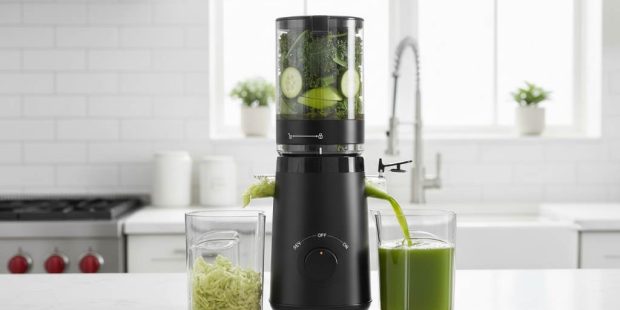
Fresh juice tastes amazing and boosts your health. Many people now start their day with a glass full of vitamins from fruits and vegetables. Cold press juicers help you get the most nutrients without heat damaging them.
Studies show these juicers keep more antioxidants and enzymes than fast-spinning models. For example, a 2019 NIH study found cold-pressed juices have higher bioactive compounds. Another lab test revealed they retain up to 82% of folate compared to just 59% in high-speed options.
Moreover, juicing increases fruit and vegetable intake. Harvard Health notes that fresh juices deliver vitamins quickly when served right away. If you want to make healthy drinks at home, check out best cold press juicer options.
What Is a Cold Press Juicer?
Cold press juicers go by other names too. People call them masticating or slow juicers. They work differently from regular ones.
These machines use a slow-turning auger. The auger crushes produce gently. Then it presses out the juice.
This process creates little heat. Less heat means less oxidation. Oxidation can destroy nutrients fast.
In contrast, traditional juicers spin blades quickly. That speed makes foam and separates juice layers sooner.
Slow juicers run at 40 to 100 RPM. Lower speeds preserve flavors and colors better.
Additionally, they handle tough items well. Leafy greens like kale juice easily in them. Hard roots such as carrots come out smooth too.
Many models offer extra functions. You can make nut milks or sorbets with them.

Why Choose Cold Press Juicing for Your Health?
Juicing adds more produce to your diet. Most adults need several servings daily. Juices make that goal easier.
Cold press methods keep more good stuff inside. Enzymes stay active longer. Vitamins like C hold up stronger.
A study from Goodnature showed clear differences. Slow pressing saves more nutrients than fast methods.
Furthermore, these juices last longer in the fridge. You can store them up to 72 hours with minimal loss.
People feel more energy from them. Skin often looks clearer too. Digestion improves for many users.
However, balance matters. Whole fruits provide fiber that juices lack. Mix both for best results.
Transitioning to daily juicing builds habits. Start small and add variety over time.
Cold Press vs. Centrifugal Juicers: Key Differences
Buyers often compare these two types. Each has strengths.
Centrifugal juicers work fast. They shred produce with sharp blades. Juice flows out quickly.
Yet speed creates heat and air bubbles. That reduces shelf life and nutrients slightly.
Cold press models take more time. They yield drier pulp though. More juice comes from the same ingredients.
Noise levels differ greatly. Slow juicers stay quiet in kitchens. Fast ones sound loud early in the morning.
Cleanup varies too. Some fast models have simple parts. Slow ones need careful brushing often.
For leafy greens, cold press wins easily. Centrifugal types struggle with spinach or wheatgrass.
In summary, choose based on priorities. Speed favors centrifugal. Nutrition favors cold press.
Key Factors to Consider When Buying a Cold Press Juicer
Several features matter for home use. Think about your needs first.
Juice Yield and Efficiency
Higher yield saves money long-term. Good models extract maximum liquid.
Look for strong augers. Dual-stage systems press twice for better results.
Test reviews with apples or carrots. Top machines leave very dry pulp.
Ease of Assembly and Cleaning
Daily use requires simple setup. Parts should snap together quickly.
Dishwasher-safe components help a lot. Wide chutes reduce pre-cutting time.
Include cleaning brushes with purchase. Small tools reach tight spots well.
Noise Level
Quiet operation fits family homes. Models under 60 decibels work great.
Lower RPM usually means less sound. Vertical designs stay compact and silent.
Size and Storage
Counter space limits options sometimes. Measure your area carefully.
Vertical juicers save room. Horizontal ones handle greens better but take more width.
Feed Chute Size
Large chutes accept whole fruits. That cuts prep work significantly.
Smaller openings need more chopping. Safety features protect fingers always.
Motor Power and Durability
Strong motors last years. Look for at least 150 watts.
Quality materials resist stains. Food-grade plastics and steel parts endure daily use.
Versatility
Multi-function models add value. Screens for smoothies or homogenizing help.
Some make baby food or pasta. Nut butter options expand recipes.
Types of Cold Press Juicers for Home
Two main designs exist. Each suits different users.
Vertical Masticating Juicers
These stand tall and slim. They fit small kitchens nicely.
Self-feeding works well here. Gravity helps produce drop in.
They juice fast for slow models. Greens perform decently too.
Horizontal Masticating Juicers
These excel with tough items. Longer augers crush fibers thoroughly.
Wheatgrass and herbs shine in them. Dual-stage versions maximize yield.
They often include more attachments. Storage needs more counter length though.
Twin Gear Juicers
These use two interlocking gears. They crush extremely finely.
Yield reaches highest levels. Nutrient extraction stands out.
However, they cost more. Cleaning takes extra effort too.
Related:
Why Choose Bespoke Kitchen Doors? The Benefits of Customisation
Why Regular Commercial Kitchen Ventilation Cleaning Is So Important
Best Features to Look for in 2026 Models
Technology improves yearly. New options enhance experience.
Low-speed motors dominate now. 43 RPM settings preserve maximum enzymes.
Safety locks prevent accidents. Reverse functions clear jams easily.
Pulp ejection automates cleanup. External containers collect waste neatly.
Quiet operation advances further. Brushless motors reduce vibrations.
Large feeding tubes grow common. Whole apples fit without cutting.
Smart controls appear in premium lines. Touch screens guide recipes.
How to Use Your Cold Press Juicer Effectively
Proper technique maximizes benefits. Follow simple steps.
Wash produce thoroughly first. Remove pits and hard seeds.
Cut items into manageable pieces. Alternate soft and hard for smooth flow.
Run slowly without forcing. Let the machine do the work.
Drink juice fresh when possible. Store in airtight glass containers otherwise.
Experiment with combinations. Add ginger for kick or lemon for brightness.
Clean immediately after use. Rinse parts under water right away.
Maintenance Tips for Long-Lasting Performance
Regular care extends life. Small habits make big differences.
Disassemble fully each time. Soak screens if pulp builds up.
Dry pieces completely before storage. Moisture causes mold growth.
Oil moving parts occasionally. Check manuals for specific advice.
Store in cool dry places. Avoid direct sunlight on plastics.
Replace worn screens timely. Fresh parts restore efficiency.
Common Mistakes to Avoid When Choosing
Buyers sometimes overlook details. Learn from others.
Skipping yield tests leads to waste. Read independent reviews carefully.
Ignoring cleaning difficulty frustrates users. Watch demonstration videos.
Buying too large wastes space. Measure twice before ordering.
Overlooking noise bothers households. Test in stores when possible.
Focusing only on speed misses nutrition. Prioritize slow pressing instead.
Conclusion
Choosing the right cold press juicer transforms your routine. You gain fresh, nutrient-dense drinks daily.
Focus on yield, ease, and quietness. Match features to your lifestyle.
Start juicing regularly for better health. Experiment and enjoy the process.
Your body will thank you. Pick a reliable model today and begin.
FAQs
What makes cold press juicers better than regular ones?
Cold press juicers preserve more nutrients and enzymes. They create less heat and oxidation during extraction.
How often should I clean my cold press juicer?
Clean after every use. Immediate rinsing prevents pulp from drying and sticking.
Can cold press juicers handle leafy greens well?
Yes, especially horizontal models. They crush fibers thoroughly for high yield.
Is cold press juice worth the extra time?
Many users say yes. Better taste and nutrition outweigh the slower process.
Do I need special produce for cold press juicing?
Organic helps avoid pesticides. Any fresh fruits and vegetables work great.
References
- NIH Study on Cold-Pressed Juice Quality: https://pmc.ncbi.nlm.nih.gov/articles/PMC6587058
- Goodnature Nutritional Comparison: https://www.goodnature.com/blog/cold-pressed-vs-centrifugal-juice-nutritional-data
- Harvard Health on Fresh Juice: https://www.health.harvard.edu/blog/fresh-juice-drinks-healthy-seem-2016072910044
- Aeitto Lab Results on Nutrient Retention: https://www.aeitto.com/blogs/guides/why-80-rpm-juicers-preserve-94-more-enzymes-than-high-speed-models-lab-results
