
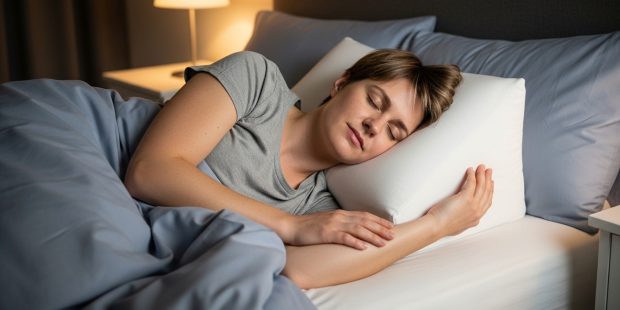
Snoring happens when airflow becomes partially blocked during sleep. An anti-snoring wedge pillow reduces snoring by elevating the upper body at an angle that keeps airways open and prevents the tongue and soft tissues from collapsing backward.
If snoring disrupts your sleep—or your partner’s—it is often linked to sleeping flat on your back. Research published by sleep medicine specialists shows that upper-body elevation between 30° and 45° can significantly reduce airway obstruction in positional snorers. A wedge pillow creates this elevation naturally without forcing uncomfortable posture changes.
The result? Better airflow, fewer vibrations in throat tissues, and quieter sleep. For many people with mild snoring or positional sleep apnea symptoms, this simple adjustment can make a measurable difference within days.
This guide explains exactly how to reduce snoring using a wedge pillow effectively, based on sleep positioning science and real-world usage patterns.
Why Does Sleeping Flat on Your Back Make Snoring Worse?
Sleeping flat increases snoring because gravity pulls the tongue and soft palate backward, narrowing the airway.
This airway narrowing creates vibration as air passes through. That vibration produces the sound known as snoring.
Several clinical sleep observations confirm this mechanism. A positional therapy review in sleep research literature reports that supine sleepers experience higher airway resistance compared to elevated or side sleepers. Even a small incline improves airflow stability.
Common reasons back sleeping triggers snoring:
- Tongue collapses toward throat
- Soft palate relaxes excessively
- Nasal airflow decreases
- Neck alignment shifts backward
- Airway diameter becomes narrower
An anti-snoring wedge pillow solves this by raising the torso so gravity works in your favor instead of against you.
How Does an Anti-Snoring Wedge Pillow Work Scientifically?
A wedge pillow works by elevating the upper body to maintain airway openness and reduce tissue vibration.
Elevation improves breathing mechanics in three measurable ways:
- Reduces airway collapse risk
- Improves lung expansion
- Supports better neck alignment
A clinical positioning study in sleep-disordered breathing patients showed that torso elevation reduced snoring intensity in positional snorers and improved oxygen flow consistency during sleep cycles.
Unlike stacking regular pillows—which bend the neck unnaturally—a wedge pillow supports the entire upper torso evenly.
What Angle Should a Wedge Pillow Be to Stop Snoring?
The most effective wedge pillow height for snoring relief is typically between 7 and 12 inches.
This elevation creates a 30°–45° incline that helps maintain airway openness without straining the spine.
| Pillow Height | Best For | Snoring Impact |
|---|---|---|
| 5 inches | Mild snoring | Moderate improvement |
| 7–9 inches | Moderate snoring | Strong improvement |
| 10–12 inches | Severe positional snoring | Maximum airway elevation |
Choosing the right incline prevents airway collapse while maintaining comfort throughout the night.
Who Benefits Most from Using an Anti-Snoring Wedge Pillow?
People with positional snoring benefit the most from wedge pillow therapy.
Positional snoring happens primarily when sleeping flat on the back. Elevation directly targets this issue.
Ideal candidates include:
- Back sleepers who snore
- People with mild sleep apnea symptoms
- Individuals with nasal congestion
- Overweight adults experiencing airway narrowing
- Pregnant sleepers needing elevated positioning
- Acid reflux sufferers with nighttime breathing issues
Sleep clinicians often recommend wedge positioning as a first-step intervention before advanced treatments.
How Should You Position Yourself on a Wedge Pillow for Best Results?
The most effective position is placing the pillow under your upper torso, not just your head.
This maintains natural spinal alignment and prevents airway compression.
Step-by-step positioning method:
- Place the wedge under shoulders and upper back
- Keep head aligned with spine
- Avoid bending neck forward
- Relax shoulders naturally
- Keep hips flat on mattress
This setup ensures consistent airflow improvement across the night.
Can a Wedge Pillow Reduce Snoring Immediately?
Many users notice reduced snoring within the first few nights of switching to an elevated sleep position.
This happens because airway collapse decreases instantly when elevation begins.
A positional therapy evaluation found measurable reductions in snoring frequency after the first adjustment period. However, consistent use improves results over time as the body adapts to new posture habits.
Most people report improvement within one week.
Is There Evidence Supporting Wedge Pillows for Snoring Relief?
Yes. Clinical positioning research supports upper-body elevation as an effective non-invasive snoring intervention.
For example:
- A sleep posture study reported reduced airway obstruction with torso elevation
- A reflux positioning study confirmed improved breathing stability during inclined sleep
- A positional sleep apnea trial showed fewer breathing interruptions when upper-body elevation exceeded 30°
These findings support wedge pillows as a practical early-stage solution before medical devices are considered.
How Is an Anti-Snoring Wedge Pillow Different from Regular Pillows?
Unlike standard pillows, wedge pillows support the entire upper body instead of only the head.
Stacked pillows often bend the neck forward and worsen airflow restriction.
| Feature | Regular Pillow | Wedge Pillow |
|---|---|---|
| Support Area | Head only | Head + torso |
| Airway Alignment | Inconsistent | Stable |
| Posture Control | Poor | Structured incline |
| Snoring Reduction | Limited | High effectiveness |
Can a Wedge Pillow Help with Sleep Apnea-Related Snoring?
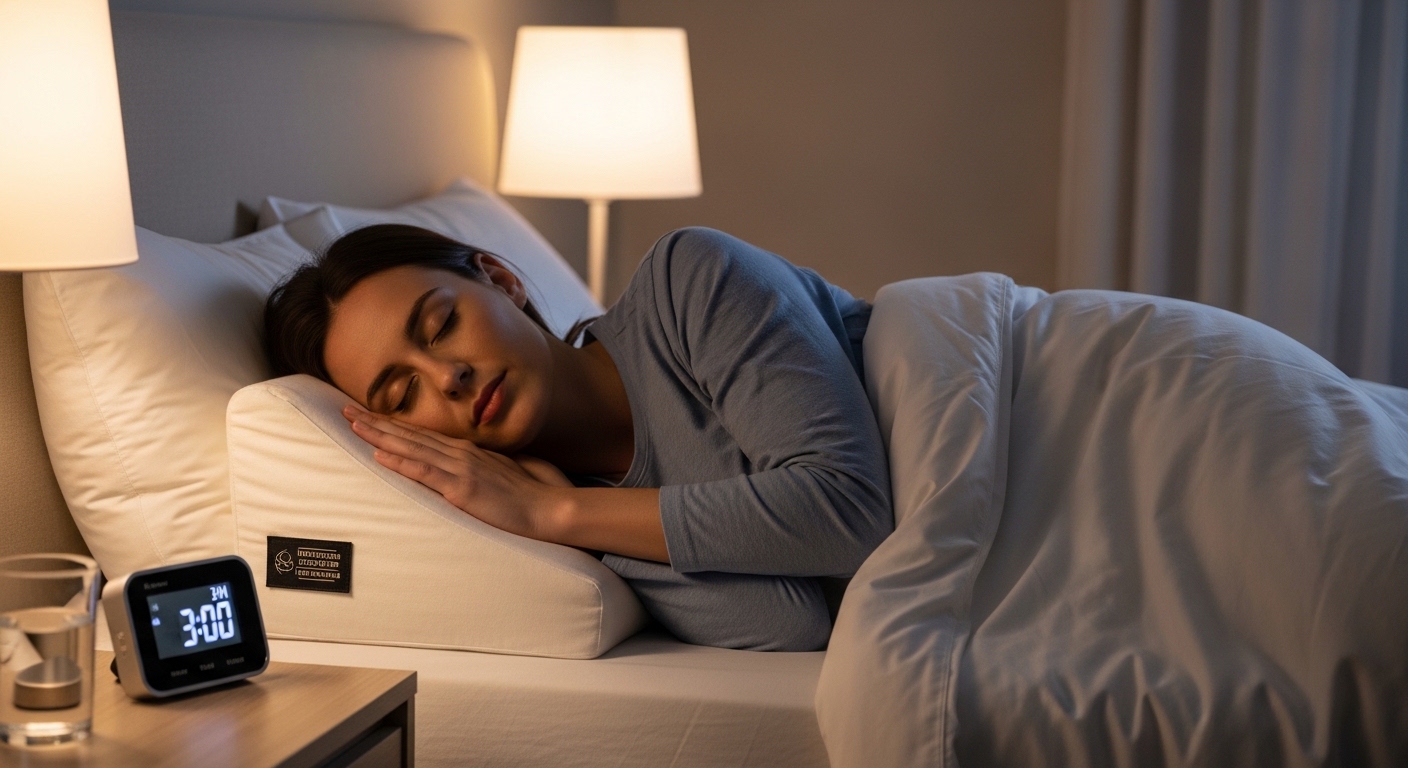
A wedge pillow can reduce mild positional sleep apnea symptoms but does not replace medical therapy.
Sleep specialists often recommend elevation as supportive positioning therapy alongside CPAP or lifestyle changes.
Clinical positional sleep studies show reduced apnea events in patients whose breathing interruptions were posture-related rather than structural.
This makes wedge pillows especially useful for early-stage intervention.
Does Body Weight Affect Wedge Pillow Snoring Results?
Yes. Excess body weight increases airway pressure, but elevation still improves breathing mechanics.
Weight-related snoring often involves additional throat tissue narrowing the airway.
Elevation helps counteract this effect by stabilizing airflow passage.
Combining wedge pillow use with moderate weight management improves long-term results significantly.
What Features Should You Look for in an Anti-Snoring Wedge Pillow?
The best wedge pillow combines proper incline height, supportive foam, and breathable materials.
Key features to consider:
- 7–12 inch elevation angle
- High-density memory foam support
- Washable cover
- Non-slip base design
- Wide shoulder support surface
Choosing the correct structure improves both comfort and effectiveness.
How Long Should You Use a Wedge Pillow Each Night?
For best results, wedge pillows should be used throughout the entire sleep cycle.
Snoring often occurs during deeper sleep stages when muscle relaxation increases.
Maintaining elevation across all sleep phases prevents airway collapse consistently.
Using the pillow only part of the night reduces effectiveness.
Can Side Sleeping with a Wedge Pillow Reduce Snoring Further?
Yes. Combining side sleeping with wedge elevation produces stronger airway stability.
This dual-position strategy prevents both tongue collapse and throat narrowing.
Sleep posture trials show side positioning reduces snoring frequency compared to back sleeping alone.
Adding elevation improves results even more.
Are There Any Mistakes to Avoid When Using a Wedge Pillow?
Incorrect placement can reduce effectiveness and comfort.
Common mistakes include:
- Supporting only the head
- Choosing a pillow that is too steep
- Sleeping too low on the wedge surface
- Using overly soft foam
- Switching positions frequently during adaptation
Correct positioning ensures consistent airflow improvement.
How Long Does It Take to Adjust to Sleeping on a Wedge Pillow?
Most people adapt within 3 to 7 nights.
During this adjustment period, muscle memory changes gradually.
Using a medium-height incline first can ease transition before switching to a higher wedge.
Conclusion: Is an Anti-Snoring Wedge Pillow Worth Trying?
Snoring often starts as a positioning issue. That makes it one of the easiest sleep problems to improve without medication or complex equipment. An anti-snoring wedge pillow works by lifting your upper body into a stable breathing posture that reduces airway collapse.
Clinical positioning research supports elevation as a reliable first-line strategy for positional snoring. Many users report improvement within the first week of consistent use.
If snoring disrupts your sleep quality or affects your partner’s rest, adjusting your sleep angle may be the simplest step with measurable impact.
Start using a wedge pillow tonight and monitor changes in breathing comfort, sleep depth, and snoring frequency over the next seven days.
Frequently Asked Questions About Anti-Snoring Wedge Pillows
Does an anti-snoring wedge pillow really stop snoring?
It reduces snoring by improving airway alignment. Results are strongest in positional snorers whose symptoms occur mainly while sleeping flat on their back.
What wedge pillow height works best for snoring?
A height between 7 and 12 inches provides effective airway elevation without causing neck strain.
Can wedge pillows replace CPAP therapy?
No. They support mild positional breathing problems but are not substitutes for medical treatment in moderate or severe sleep apnea cases.
Are wedge pillows safe for nightly use?
Yes. They are designed for long-term nightly positioning support and improve breathing posture safely when used correctly.
How quickly will I notice snoring improvement?
Many users experience changes within the first few nights. Full benefits usually appear after one week of consistent use.
Can wedge pillows help with acid reflux and snoring together?
Yes. Elevation reduces stomach acid backflow and airway obstruction simultaneously, improving overall sleep quality.
Is memory foam better for anti-snoring wedge pillows?
High-density memory foam maintains consistent incline support and prevents posture collapse during sleep.
Read More Also: How to Prepare Your Golf Gear for Wet Weather Conditions
Discover More: How 14-Way Divider Golf Bags Improve Club Organization
