

Golf is one of the most rewarding sports you can pick up. It challenges your mind, your body, and your patience all at once. However, getting started can feel confusing. There are so many clubs, bags, accessories, and brands to choose from. Knowing where to begin is half the battle.
The good news is that building a solid golf kit in 2026 does not have to be complicated or expensive. With the right guidance, you can put together a set that helps you learn the game quickly and enjoy every round. This article walks you through everything you need, from clubs to clothing, so you can step onto the course with confidence.
Why Your First Golf Kit Sets the Tone
Your first set of golf equipment shapes how fast you improve. The wrong clubs can make learning harder than it needs to be. On the other hand, the right equipment helps you develop good habits from the start.
Many beginners make the mistake of borrowing old clubs or buying whatever is cheapest. While saving money is important, equipment that does not suit your body or swing can hold you back. Therefore, it is worth taking a little time to understand what you actually need before you spend a single dollar.
A well-chosen beginner kit gives you better feedback from your shots. It also makes the game more enjoyable. When your equipment works with you instead of against you, you start to see progress much faster.
Understanding What Goes Into a Golf Kit
A complete golf kit includes several key components. Each one plays a role in your performance and comfort on the course. Here is what every beginner should know about.
Golf clubs are the heart of any kit. A golf bag carries everything you need for a round. Golf balls, tees, and gloves are small but essential items. Additionally, proper footwear and weather-appropriate clothing round out a solid setup.
You do not need to buy everything at once. However, understanding what each piece does will help you prioritize your purchases and avoid wasting money on things you do not yet need.
Choosing the Right Golf Clubs
How Many Clubs Do You Actually Need?
The rules of golf allow up to 14 clubs in your bag. However, beginners do not need that many. Starting with seven to nine clubs is more than enough. Too many choices can actually slow down your learning.
A basic beginner set typically includes a driver, a fairway wood, a hybrid, a few irons, a pitching wedge, and a putter. This combination covers all the essential shots you will face on a course. Therefore, you will be fully equipped without feeling overwhelmed.
What Makes Entry Level Golf Clubs Different
Entry level golf clubs are designed with beginners in mind. They are built to be forgiving, which means they help you get decent results even when your swing is not perfect. This is important because no beginner has a perfect swing right away.
Forgiving clubs have a larger sweet spot on the club face. This means off-center hits still travel reasonably well. Additionally, they are usually lighter than professional-grade clubs, which makes them easier to swing for players still building strength and technique.
When shopping for entry level golf clubs, look for complete sets rather than buying individual clubs. These sets are priced better and are curated to work well together. Brands like Callaway, TaylorMade, and Wilson all offer solid beginner sets in 2026.
Irons: Cavity Back vs Blade
You will hear these terms a lot when shopping for irons. Blades are thin and precise, but they require a very consistent swing to use well. They are designed for experienced players.
Cavity back irons, however, are the right choice for beginners. They have a hollowed-out back that distributes weight around the edges of the club. This design makes them much more forgiving. Therefore, always look for cavity back irons when building your first set.
The Putter: Do Not Overlook It
Many beginners focus entirely on their driver and forget about the putter. This is a mistake. Putting accounts for nearly half of all the strokes in a round of golf. A comfortable, well-balanced putter can dramatically lower your score.
For beginners, a mallet-style putter is generally the easiest to use. It offers more stability and is easier to align with the hole. Try a few different putters at a shop before deciding. The feel of the putter in your hands matters more than the brand name on it.
Selecting the Right Golf Bag
Your golf bag needs to be practical and comfortable. There are three main types to consider: carry bags, stand bags, and cart bags.
Carry bags are the lightest option. They are great if you plan to walk the course. Stand bags have built-in legs that prop the bag up on the course. Most beginners find stand bags to be the most versatile choice. Cart bags are larger and sit on a golf cart, but they are heavier and less convenient if you prefer walking.
Look for a bag with enough pockets to store your balls, tees, gloves, and a rain jacket. Additionally, padded shoulder straps make a big difference on long rounds. A comfortable bag means less fatigue and more focus on your game.
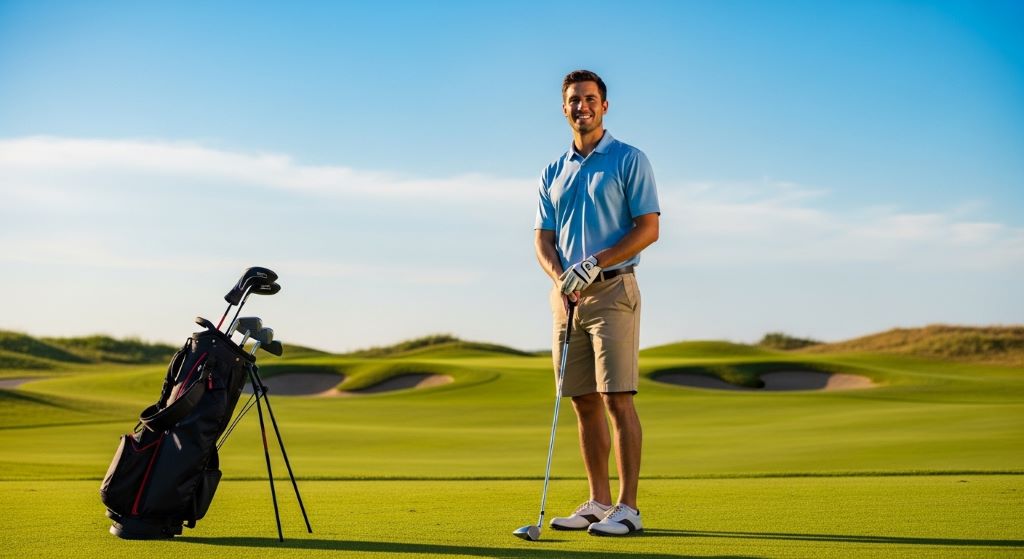
Golf Balls: Keep It Simple
Beginners lose a lot of golf balls. That is just the reality of learning the game. Therefore, do not spend a fortune on premium balls when you are just starting out.
Look for two-piece golf balls designed for distance and durability. These balls are more affordable and perform well for players still developing their swing. Brands like Titleist, Callaway, and Srixon all offer beginner-friendly options at reasonable prices.
As your game improves, you can experiment with higher-performance balls. For now, buying in bulk and keeping it simple is the smartest move.
Essential Accessories Every Beginner Needs
Golf Gloves
A golf glove improves your grip and prevents blisters. Wear it on your lead hand, which is your left hand if you are right-handed. A glove that fits well will feel snug but not tight. Replace it when it becomes worn or stiff.
Tees
Tees are inexpensive and easy to overlook. However, having the right tee height for your driver makes a real difference. Wooden tees are traditional and work perfectly well. Plastic tees last longer and often come with depth markings to help you find the right height.
Ball Markers and Divot Tools
These small items show that you respect the course and other players. A ball marker helps you mark your ball on the green without interfering with other players. A divot tool repairs the small marks your ball leaves when it lands on the green. Both items are inexpensive and often come included in starter gear bundles.
Rangefinder or GPS Watch
Knowing the distance to the hole helps you choose the right club. In 2026, there are many affordable rangefinder options and GPS golf watches available. These tools help beginners learn the course faster and make smarter decisions. A basic model is all you need to start with.
Golf Footwear: Comfort and Traction Matter
Golf shoes give you stability during your swing. Without proper footwear, your feet can slip, which ruins your balance and your shot. You do not need the most expensive pair on the market. However, you do need shoes made specifically for golf.
Look for shoes with soft spikes or spikeless soles. Soft spike shoes offer excellent grip on wet grass. Spikeless shoes are more versatile and can be worn on and off the course. Either option works well for beginners. Comfort should be your top priority since you will be walking several miles each round.
What to Wear on the Golf Course
Golf has a dress code at most courses. Knowing what to wear before you show up will save you from embarrassment. Most courses require collared shirts and tailored shorts or trousers. Denim, athletic shorts, and tank tops are typically not allowed.
Choose lightweight, breathable fabrics that allow a full range of motion. In 2026, many golf brands offer moisture-wicking materials that keep you cool and dry. Additionally, a good golf hat protects you from the sun during long rounds. A lightweight rain jacket is also worth carrying in your bag, as weather on the course can change quickly.
Building Your Kit on a Budget
You do not need to spend thousands to get started. In fact, many excellent starter gear options are available at very accessible price points. Here are some ways to keep costs down without sacrificing quality.
- Buy a complete beginner club set instead of individual clubs. These sets are priced better and include everything you need.
- Shop end-of-season sales at golf retailers for discounts on bags and shoes.
- Consider certified pre-owned clubs from reputable brands. Many are in near-perfect condition.
- Start with a stand bag instead of a full cart bag. It is more affordable and more practical for most beginners.
- Buy golf balls in bulk packs to save money per ball.
Additionally, many golf courses offer rental clubs for your first few rounds. This is a great way to try the sport before committing to a full purchase.
How to Know When It Is Time to Upgrade
As your game improves, your equipment needs will change. After six months to a year of regular play, you may start to outgrow your beginner set. Signs that you are ready to upgrade include hitting the ball consistently, feeling limited by your current clubs, and shooting scores that reflect real improvement.
However, do not rush to upgrade too soon. Many beginners make the mistake of thinking new clubs will fix swing problems. They rarely do. Focus on lessons and practice first. When your fundamentals are solid, then invest in better equipment.
Conclusion
Building the perfect golf kit as a beginner in 2026 comes down to making smart, informed choices. Start with a set of entry level golf clubs that are forgiving and suited to your swing speed. Add a comfortable stand bag, durable golf balls, and the essential accessories like gloves, tees, and a divot tool. Choose proper golf footwear and clothing that meets course dress codes.
You do not need to spend a fortune. Starter gear has improved significantly in recent years, and even budget-friendly options now offer real performance benefits. Focus on the fundamentals, take lessons when you can, and let your equipment grow with your game. Golf is a lifelong sport, and starting with the right kit makes the journey far more enjoyable.
Frequently Asked Questions
How much should a beginner spend on a first golf kit?
A solid beginner golf kit typically costs between $200 and $500. This includes a complete club set, a stand bag, and basic accessories. You do not need to spend more than this when you are just learning the game.
Is it better to buy new or used golf clubs as a beginner?
Both options work well. New clubs come with a warranty and are in perfect condition. However, certified pre-owned clubs from reputable brands offer excellent quality at a lower price. Either choice is fine as long as the clubs are beginner-friendly and forgiving.
How many clubs should a beginner carry in their bag?
Beginners should carry between seven and nine clubs. A driver, a fairway wood or hybrid, a few irons, a pitching wedge, and a putter cover all the shots you will need on the course. Adding more clubs too soon can create unnecessary confusion.
Do beginners need golf lessons along with their new kit?
Yes, lessons are strongly recommended. Good equipment helps, but proper technique makes the biggest difference for new players. Even a few lessons with a qualified instructor will speed up your improvement and help you avoid developing bad habits early on.
What is the most important piece of golf equipment for a beginner?
The putter is arguably the most important club for beginners. Since putting accounts for nearly half of all strokes in a round, a comfortable and well-balanced putter can have the biggest impact on your score right away.
Related Topics:
Faxco 10ft Cotton Rope Breakdown: Triple-Strand Power for Outdoor Pros
How to Prepare Golf Gear for Wet Weather Conditions
