
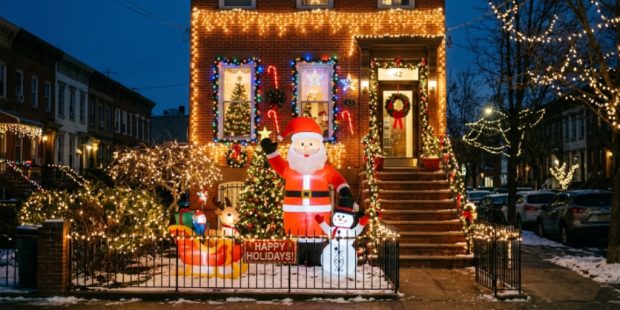
Every winter, a quiet Brooklyn neighborhood turns into one of the most talked-about holiday attractions in New York City. Homeowners cover their houses with thousands of bulbs, giant inflatable Santas, and moving reindeer. Families walk down block after block just to take it all in. This guide covers everything you need to know for the 2026 season, including when to go, where to park, and which tours are worth booking.
What Makes This Neighborhood Display So Special
Unlike a single park or plaza covered in lights, this display spreads across dozens of private homes. Many residents have decorated their properties for decades, and some even compete informally to build the biggest and brightest setup on the block. You will see toy soldiers taller than doorways, sleighs on rooftops, and synchronized light shows set to music. Some homeowners hire professional decorating companies, while others do everything by hand as a family tradition.
Because the display sits inside a residential area, the atmosphere feels different from a typical tourist stop. Neighbors greet visitors, hand out hot cocoa on some nights, and chat about how long it took to put everything up. This personal touch is part of why so many people return year after year.
The tradition traces back several decades, with a handful of original families setting the standard that later spread across the whole area. Over time, word spread beyond the local community, and the neighborhood slowly turned into a destination that draws visitors from across the country. Today, the scale has grown so large that some homes hire electricians to plan out their wiring months in advance, ensuring the setup can handle weeks of nightly use without a single bulb going dark.
What began as friendly neighborhood pride has since become a small economic engine as well. Local diners fill up on weekend nights, tour operators build entire itineraries around the display, and nearby shops sell hot drinks and souvenirs to passing visitors. Despite this growth, the core spirit has stayed the same: families decorating their own homes simply because they enjoy sharing the season with anyone who walks by.
When to Visit in 2026
Homeowners usually begin hanging their decorations the week of Thanksgiving, and most displays are fully lit by the weekend right after. In 2026, Thanksgiving falls on November 26, so the neighborhood should be glowing by Friday, November 27. However, the single best stretch to visit runs from mid-December through New Year’s Eve, when every house is finished and the crowds settle into a steady rhythm.
Decorations typically stay up through the first week of January, so there is no need to rush if your schedule is tight. Still, weekends in mid-to-late December tend to feel the busiest, so a weekday trip is often more relaxed.
The table below breaks down the best viewing windows.
| Time Period | What to Expect |
| Late November | Some houses lit, others still being decorated |
| Early to mid-December | Most homes finished, moderate crowds |
| Mid-December to December 31 | Full display, peak crowds, best photo opportunities |
| Early January | Displays still up, noticeably quieter |
For the best experience, arrive right at dusk, around 4:30 to 5:00 p.m. in December. Most homes keep their lights running until roughly 9:00 p.m., though a few stay lit later.
Where to Find the Lights
The display sits in a residential pocket of Brooklyn, roughly between 83rd and 86th Streets, running along 11th, 12th, and 13th Avenues. This stretch is sometimes nicknamed the neighborhood’s own holiday boulevard. The blocks are hilly, so comfortable walking shoes make a real difference, especially on colder nights when sidewalks can feel slippery.
Because the area is entirely residential, there are no ticket booths, gates, or set entry points. You simply walk the sidewalks and take in the view. Most visitors start near 84th Street and 12th Avenue, since that block traditionally holds some of the most elaborate setups, then wander outward from there.
Getting There by Public Transit
If you are traveling from Manhattan or elsewhere in Brooklyn, the subway is a reliable option. Take the D train to the 79th Street station, then walk roughly 15 to 20 minutes toward 12th Avenue. Alternatively, the R train to 86th Street leaves a similar walk. Both routes pass through quiet residential blocks, so following a map app is helpful, particularly after dark.
Buses also run through the area, though schedules can be less predictable during the holiday season due to added traffic from visitors. Ride-share services are another option, but drop-off spots fill quickly on weekend evenings, so building in extra time is wise.
If you are traveling with young children or older relatives, it helps to plan the walk from the subway in advance. The route from either station passes mostly quiet residential blocks with sidewalks, so it is manageable for most fitness levels, though the hills can be tiring for anyone who prefers flatter ground. Wearing a warm coat and sturdy shoes makes this stretch far more comfortable, particularly once temperatures drop after sunset.
Travelers coming from outside New York City often combine a transit trip with a stop in Manhattan beforehand, since many subway lines connect the two boroughs directly. This approach also avoids the need for a rental car, which can be a relief given how limited parking becomes once the season is in full swing.
Driving and Parking Tips
Driving offers flexibility, but parking becomes tight once the sun sets. Street parking exists throughout the neighborhood, though spots near the busiest blocks disappear fast on weekends. Circling a few blocks farther out and walking in often saves time compared to waiting for a spot near the main display.
Additionally, some residents post signs asking visitors not to block driveways, and it is worth respecting these requests since real families live here year-round. If you are visiting with a larger group, consider parking a short distance away and walking together rather than searching for adjacent spots.
Weeknights tend to offer noticeably easier parking than Friday or Saturday evenings, so shifting your trip earlier in the week can save considerable time. It also helps to avoid arriving right at dusk, when the largest wave of cars tends to enter the neighborhood at once. Arriving thirty minutes earlier, before the crowds peak, often means a shorter search for a spot and a calmer walk once you park.
Carpooling is another practical option if you are traveling with friends or family. Fewer cars on the street means less competition for parking, and splitting the cost of gas or a ride-share fare makes the trip more affordable for everyone involved.
Interactive Map Overview
While a printed map can be useful, most visitors find it easier to pull up a phone map and search the cross streets directly. The core viewing area forms a rough rectangle bounded by 83rd Street to the north, 86th Street to the south, 11th Avenue to the east, and 13th Avenue to the west. Walking this grid in a loop, rather than back and forth on a single street, tends to cover the most ground with the least backtracking.
Several travel blogs and local tourism sites also publish updated walking maps each season, highlighting which specific houses are decorated that year. Checking one of these shortly before your trip can help you prioritize which blocks to see first if you are short on time.
Guided Tour Options
For visitors who prefer not to navigate transit or parking, guided bus tours remain a popular choice. These tours typically depart from Manhattan, often near Times Square or Union Square, and include round-trip transportation on a heated coach. Guides usually share background on the neighborhood’s history and point out standout houses along the way.
Most tours run two to three hours and combine a scenic drive with time to walk the blocks on foot. Some itineraries also swing past nearby Bay Ridge or offer skyline views near the Brooklyn Bridge before heading back into Manhattan. Prices generally range from around 50 to 90 dollars per person, depending on the operator and whether food or drinks are included.
Because these tours are popular and space on each bus is limited, booking a week or two in advance is strongly recommended, especially for dates in mid-to-late December. Here is a quick comparison of what to expect from typical tour packages.
| Feature | Standard Bus Tour | Premium Walking Tour |
| Duration | 2 to 3 hours | 2 to 3 hours |
| Transportation | Round-trip coach | Round-trip coach |
| Guide commentary | Included | Included, often more detailed |
| Extra stops | Sometimes, like Bay Ridge | Frequently included |
| Typical price range | $50 to $70 | $70 to $90 |
Tips for a Smooth Visit
A few small preparations can make the evening far more enjoyable.
- Dress warmly in layers, since Brooklyn evenings in December can feel colder near the water.
- Bring a portable phone charger, since taking photos in the cold drains batteries quickly.
- Walk in a group after dark for comfort and safety on residential streets.
- Keep noise levels reasonable out of respect for residents still living in their homes.
- Consider a weeknight visit if you want thinner crowds and easier parking.
These simple habits go a long way toward keeping the experience pleasant for both visitors and the families who open their homes to the public each year.
Nearby Things to Do
If you have extra time, the surrounding area offers a few worthwhile stops. Bay Ridge, just a short drive or bus ride away, has its own scattering of decorated homes and a lively restaurant scene for dinner afterward. Local bakeries and pizzerias throughout the neighborhood also make for a warm, low-key break between blocks of walking.
Therefore, pairing your evening with a nearby meal or dessert stop can turn a quick light-viewing trip into a full night out.
Conclusion
Visiting this Brooklyn tradition remains one of the most memorable ways to experience the holiday season in New York City. Whether you arrive by subway, drive in and search for parking, or book a guided coach tour, the payoff is the same: block after block of homes lit up with genuine holiday spirit. Plan your trip for late November through early January, aim for early evening hours, and dress warmly for a walk through hilly streets. With a little planning around timing, transportation, and parking, your visit should go smoothly from start to finish.
Frequently Asked Questions
When do the Dyker Heights Christmas lights turn on in 2026?
Most homes begin lighting up the weekend after Thanksgiving, which falls around November 27, 2026, though the fullest display appears by mid-December.
How late into the season do the decorations stay up?
The lights typically remain through New Year’s Eve and often stay lit into the first week of January.
Is there a fee to walk around and see the lights?
No. The neighborhood streets are public, so walking through to view the homes is completely free.
What is the best time of day to visit?
Early evening, around dusk to 7 p.m., tends to offer bright displays without the heaviest crowds that build up later at night.
Are guided bus tours worth booking?
Guided tours can be worthwhile if you want to avoid parking hassles or prefer a heated ride with commentary, though walking the blocks independently is a fully free alternative.
