
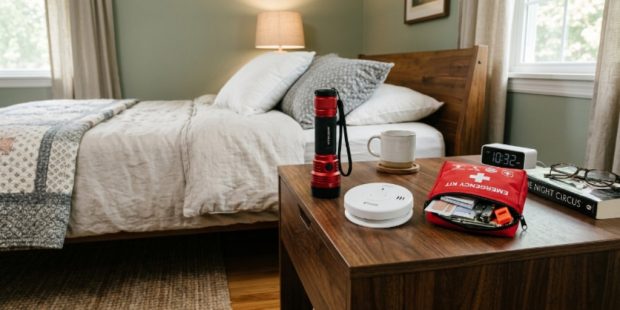
Most people think about home safety in terms of front doors and window locks. However, the bedroom is one of the most overlooked spaces when it comes to emergency preparedness. You spend nearly a third of your life there. A fire, a medical event, a break-in, or a natural disaster can happen while you are asleep. Therefore, preparing your bedroom with the right tools and equipment is one of the smartest decisions you can make for yourself and your family.
This article walks you through practical, affordable steps to make your bedroom a safer space. You do not need to be an expert. You just need the right information and a plan.
Why Bedroom Safety Deserves More Attention
Emergencies rarely give advance notice. When something goes wrong at night, you have less time to react and fewer resources around you. Your mind is slower when woken from a deep sleep. The room is dark. You may be disoriented.
This is exactly why preparing your bedroom matters so much. Having the right items within reach can mean the difference between a manageable situation and a tragedy. Additionally, families with children or elderly members face even greater risks, since those individuals may not be able to respond quickly on their own.
Many homeowners invest in alarm systems for their front doors and living rooms. However, they rarely think about what happens once an intruder or emergency gets past those first lines of defense. The bedroom should be your final layer of protection.
Start with Smoke and Carbon Monoxide Detection
Before anything else, every bedroom needs a working smoke detector. This is non-negotiable. Fires spread faster at night because they go undetected longer. A smoke alarm installed inside or just outside the bedroom door gives you the early warning you need to escape safely.
Carbon monoxide is equally dangerous. It is colorless and odorless, which means you cannot detect it without a device. A combination smoke and carbon monoxide detector covers both threats in one unit. These are inexpensive and easy to install.
Test your detectors monthly. Replace batteries once a year. Additionally, replace the entire unit every eight to ten years, since sensors degrade over time.
Keep a Flashlight Within Arm’s Reach
Power outages happen during storms, earthquakes, and fires. When the lights go out, navigating a dark room can be dangerous. You may trip, fall, or lose precious seconds looking for a light source.
A reliable flashlight stored in your bedside drawer is one of the simplest and most effective safety steps you can take. Choose a model with long battery life and a bright beam. Some people prefer rechargeable models that plug directly into a wall outlet next to the bed.
Furthermore, glow-in-the-dark path markers along the floor can guide you toward the door or window during a blackout. These are inexpensive and easy to apply.
Build a Bedside Emergency Kit
A small kit kept beside your bed can address several types of emergencies quickly. You do not need a large bag or a complicated system. A simple container with a few key items is enough.
Consider including the following in your bedside kit:
- A small first aid kit with bandages, antiseptic wipes, and pain relievers
- A whistle for signaling for help if you are trapped or injured
- A multi-tool or folding knife for cutting seatbelts, rope, or zip ties
- A phone charger or portable power bank to keep communication available
- A list of emergency contacts printed on paper in case your phone dies
- Prescription medications you take daily
This is where indoor survival gear starts to make a real difference. Having these items grouped together and easy to reach means you spend less time searching and more time acting.
Invest in a Window Escape Ladder
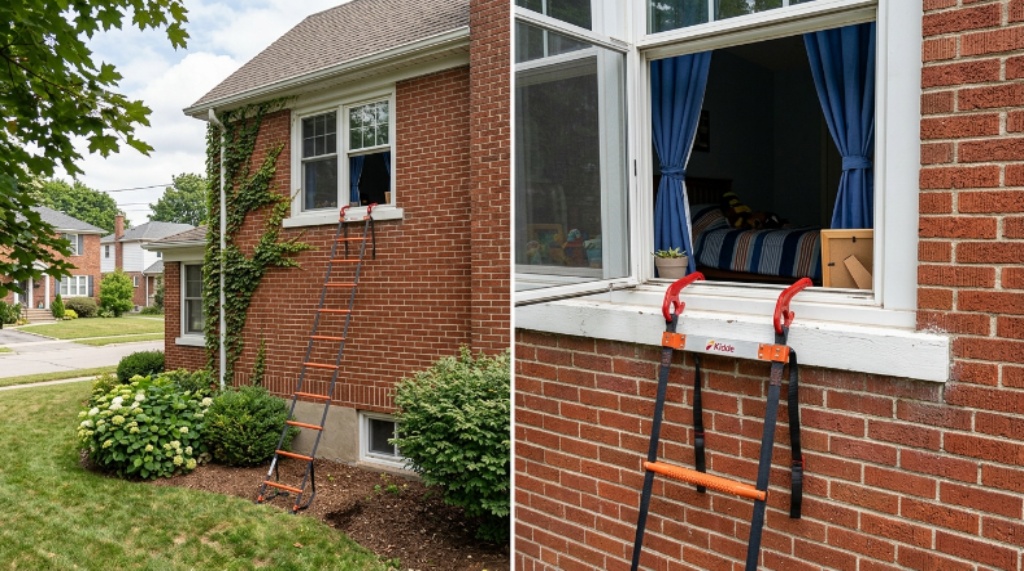
If your bedroom is on the second floor or higher, a window escape ladder is one of the most important tools you can own. In a fire, staircases can become blocked by smoke or flames within minutes. A window may be your only exit.
Escape ladders attach to the window sill and unfold to reach the ground below. They are compact enough to store under a bed or in a closet. Most models support several hundred pounds and can be deployed in under a minute with practice.
Practice using the ladder before an emergency. Familiarity reduces panic. Additionally, make sure every family member who sleeps in that room knows where it is and how to use it.
Reinforce Your Bedroom Door
A solid bedroom door buys you time. In a fire, a closed door can significantly slow the spread of smoke and flames. In a break-in scenario, it can delay an intruder long enough for you to call for help or escape through a window.
There are several ways to reinforce a bedroom door without major renovation. A door barricade bar wedged under the handle is one of the most effective bedroom protection tools available. These are portable, affordable, and require no installation. They can be deployed in seconds and provide strong resistance against forced entry.
Door frame reinforcement kits are another option. They strengthen the frame around the lock, which is typically the weakest point of a door. However, these require basic tools to install.
Address Fire Escape Planning
Knowing what to do is just as important as having the right equipment. Every household should have a fire escape plan that includes the bedroom. Identify two ways out of each bedroom. One is typically the door. The second should be a window.
Practice the plan with everyone in the home. Walk through it slowly the first time, then practice it at speed. Make sure children understand the route. Additionally, designate a meeting point outside the home so you can confirm everyone has escaped safely.
Keep shoes near your bed. Walking on debris, broken glass, or hot surfaces with bare feet can slow you down and cause injury. A pair of closed-toe shoes stored under the bed is a simple and often overlooked safety measure.
Consider Personal Safety Tools
Personal safety inside the home is a sensitive but important topic. Each family must make decisions based on their own values, local laws, and specific circumstances.
Some people choose to keep personal alarms in the bedroom. These small devices emit a loud sound when activated and can disorient an intruder or alert neighbors. They require no training and are legal everywhere.
Others opt for pepper spray designed for home use. If you choose this option, store it securely and make sure only trained adults in the household have access to it.
Whatever you decide, the goal is the same. You want to create enough time and noise to either escape or call for help. Therefore, any tool that supports that goal is worth considering as part of your broader set of bedroom protection tools.
Organize and Review Your Setup Regularly
Buying the right equipment is only the first step. Maintaining it is just as important. Batteries lose charge. Medications expire. Flashlights get moved. Emergency plans get forgotten.
Set a reminder every six months to review your bedroom safety setup. Check batteries, restock your kit, and walk through your escape plan again. This habit takes less than thirty minutes but keeps your preparation current and reliable.
Additionally, update your plan whenever your household changes. A new baby, a visiting elderly parent, or a new home layout all affect how you should prepare.
Conclusion
Bedroom safety is not about fear. It is about being prepared. Fires, power outages, medical emergencies, and break-ins are real risks that can happen to anyone. Fortunately, addressing them does not require a large budget or complicated systems.
Start with a smoke and carbon monoxide detector. Add a flashlight, a bedside emergency kit, and a window escape ladder if you are on an upper floor. Reinforce your door and create a clear escape plan. Consider personal safety tools that fit your household’s needs and values.
The right indoor survival gear gives you confidence and control during the moments that matter most. Review your setup regularly and keep it current. A few thoughtful steps today can protect the people you love when it counts.
Frequently Asked Questions
What is the most important piece of safety equipment to keep in a bedroom?
A working smoke detector is the single most important item. It provides early warning during one of the most dangerous threats a household faces. Pair it with a carbon monoxide detector for complete coverage.
How do I set up a bedroom escape plan for my family?
Identify two exits from each bedroom, usually the door and a window. Practice the route with all household members. Assign a meeting point outside the home and review the plan every six months.
Are window escape ladders safe to use?
Yes, when used correctly. Choose a ladder rated for your household’s combined weight, store it near the window, and practice deploying it before an emergency. Familiarity with the equipment makes it much safer to use under stress.
What should I keep in a bedside emergency kit?
A basic first aid kit, a flashlight, a whistle, a portable phone charger, emergency contact information on paper, and any daily medications are all practical items to include.
How often should I test bedroom smoke detectors?
Test smoke detectors once a month by pressing the test button. Replace batteries annually and replace the entire unit every eight to ten years to ensure the sensors remain accurate.
