
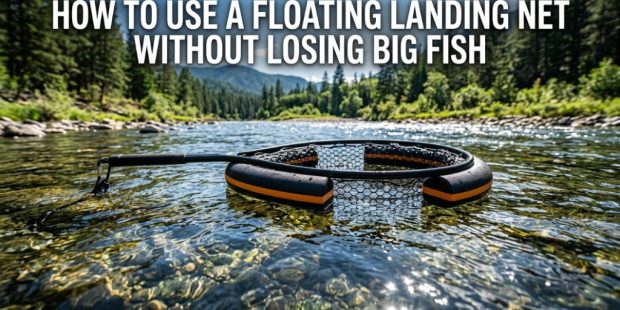
Using a floating rubber net correctly can dramatically reduce lost fish during landing, especially when targeting trout, bass, or other fast-moving freshwater species. The key is to guide the fish headfirst into the net while maintaining steady tension on the line, instead of chasing the fish aggressively with the net.
Why Do Anglers Lose Fish While Netting Them?
Most anglers lose fish during the final few seconds of the fight because of poor net positioning, rushed movements, or using the wrong type of net. A properly sized trout fishing net with a rubberized floating frame improves control, protects fish slime coating, and reduces hook tangles.
You finally hook a trophy trout after hours on the river. Your drag is perfect. Your rod control feels solid. Then the fish reaches the shoreline, makes one violent shake, and disappears before touching the net.
This is one of the most common failures in freshwater fishing. Studies from fisheries conservation programs show that improper handling and landing techniques increase fish stress and post-release mortality rates significantly. Traditional nylon nets also create more tangles and remove protective slime from fish.
A modern catch and release net solves many of these problems. Floating designs prevent accidental sinking, while rubber mesh protects fish and simplifies landing. But even the best landing net only works when used correctly.
This guide explains exactly how to use a floating landing net efficiently, safely, and consistently without losing big fish at the boat, shoreline, or riverbank.
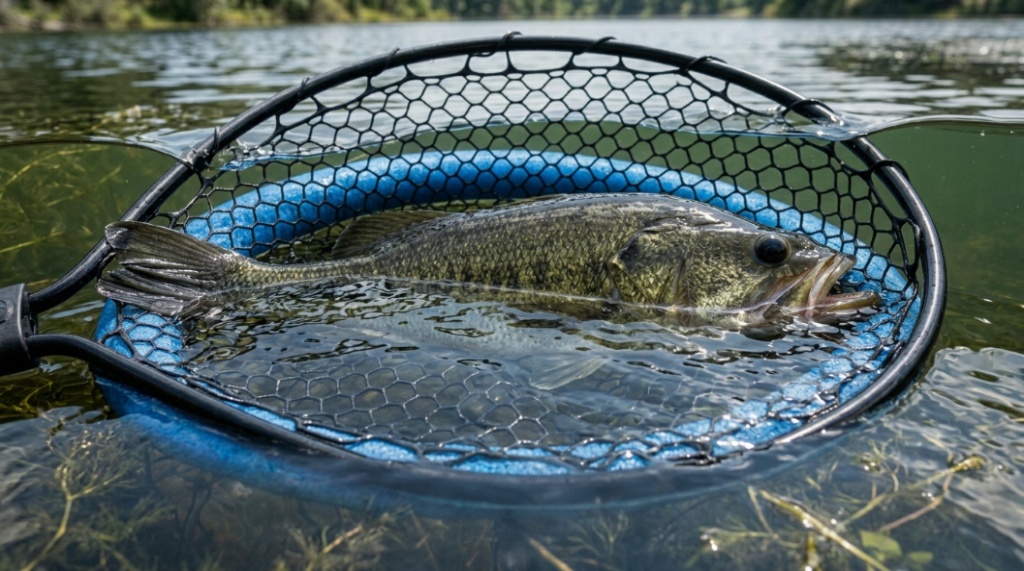
What Is a Floating Landing Net?
A floating landing net is a fishing net designed with buoyant materials that keep it afloat if dropped into the water. Most quality models also feature rubber-coated mesh for fish safety and easier hook removal.
Unlike traditional nylon landing nets, floating models are optimized for modern catch-and-release fishing. They are especially popular among fly anglers, kayak fishermen, trout anglers, and wade fishermen.
Key Features of a Floating Rubber Net
- Buoyant frame or foam-lined rim
- Rubber or silicone mesh
- Fish-friendly knotless design
- Lightweight construction
- Tangle-resistant net bag
- Corrosion-resistant handle materials
Many premium trout nets use wood, carbon fiber, or aluminum frames paired with transparent rubber baskets to reduce fish stress and improve handling efficiency.
Why Is a Rubber Net Better for Catch and Release Fishing?
A rubber net is better for catch and release because it minimizes damage to fish scales, slime coating, and fins while reducing hook tangles during landing.
Fish rely on their slime coating as a protective barrier against infections and parasites. Traditional nylon mesh strips away that protective layer more aggressively than smooth rubber mesh.
Rubberized landing nets also offer practical advantages for anglers:
- Hooks rarely embed deeply into rubber mesh
- Fish stay calmer in the water
- Net bags dry faster
- Less odor retention
- Easier cleaning and maintenance
- Reduced fin splitting and scale loss
According to multiple fisheries management studies, minimizing handling time significantly improves survival rates for released trout and salmon species.
How Do You Properly Net a Big Fish?
The correct method is to guide the fish headfirst into the net while keeping the net stationary underwater. Avoid stabbing at the fish or chasing it with the net.
Step-by-Step Netting Technique
- Fight the fish until it becomes controllable
- Keep steady pressure on the rod
- Position the net underwater before the fish arrives
- Lead the fish toward the opening headfirst
- Lift smoothly once the fish enters fully
The biggest mistake anglers make is trying to scoop from behind. Fish naturally swim forward when pressured. Attempting to chase from the rear often triggers explosive escape runs.
Why Headfirst Netting Works Best
Fish cannot easily swim backward. When guided into a floating rubber net headfirst, they usually commit fully into the basket before reacting.
This technique works particularly well for:
- Rainbow trout
- Brown trout
- Smallmouth bass
- Walleye
- Pike
- Redfish
What Size Trout Fishing Net Should You Use?
The ideal trout fishing net should be large enough to hold the fish comfortably without folding or compressing the body.
| Fish Size | Recommended Net Hoop | Best Net Depth |
|---|---|---|
| Small trout (8–14 inches) | 12–16 inches | 8–12 inches |
| Medium trout (15–20 inches) | 16–20 inches | 12–16 inches |
| Large trout (20+ inches) | 20–24 inches | 16–24 inches |
Using a net that is too small forces anglers to rush the landing process. Fish often bounce off undersized hoops or partially enter before escaping.
A deeper basket provides more containment for strong fish while reducing violent thrashing near the rim.
When Should You Use a Floating Net Instead of a Standard Net?
A floating landing net is ideal when wading rivers, fishing from kayaks, fly fishing, or fishing areas with strong currents.
Standard nets can sink quickly if dropped. That becomes a major problem in moving water or deep lakes.
Situations Where Floating Nets Excel
- Kayak fishing
- Wade fishing rivers
- Float tube fishing
- Fly fishing streams
- Bank fishing steep shorelines
- Boat fishing in windy conditions
Many fly anglers attach floating nets to magnetic release systems on fishing vests for instant access.
How Can You Avoid Losing Fish at the Net?
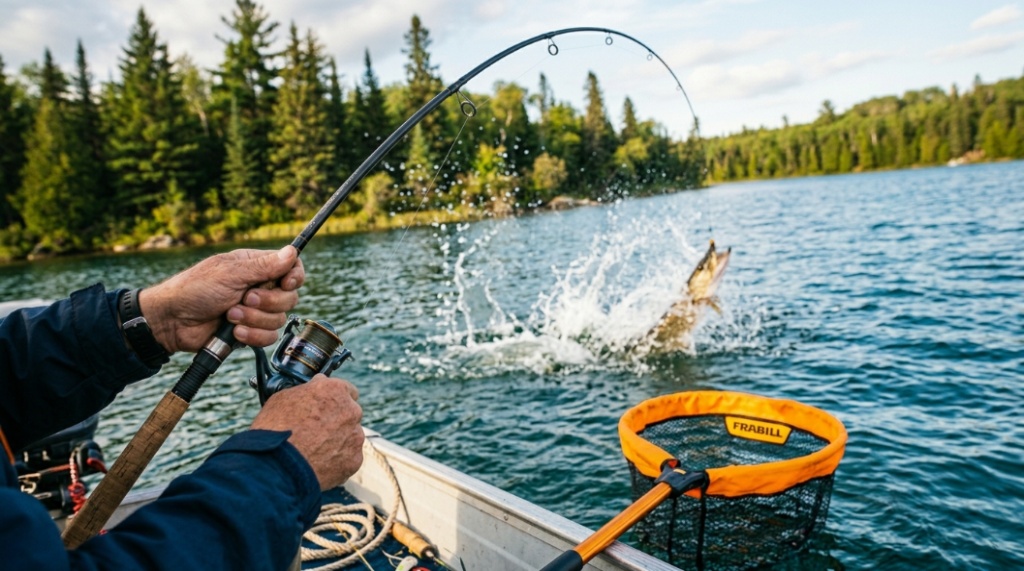
To avoid losing fish at the net, stay patient during the fight, maintain line tension, and wait until the fish tires before attempting the landing.
Common Reasons Fish Escape During Landing
- Rushing the net attempt
- Lifting fish by the line
- Using undersized nets
- Chasing fish with the net
- Allowing slack line
- Improper drag settings
Practical Example
Imagine fighting a 24-inch brown trout in current. If you attempt to net it while the fish still has full energy, it may surge sideways at the last second. Instead, allow the fish to glide naturally toward you while keeping its head above the current line.
Once the fish loses directional control, slide the catch and release net underneath smoothly.
Should the Net Stay in the Water?
Yes. Keeping the net partially submerged reduces fish stress and improves landing control.
This is especially important for trout and salmon species. Fish calm down faster in water than when suspended in air.
Benefits of Keeping Fish in Water
- Reduced stress response
- Better oxygen flow through gills
- Lower injury risk
- Improved release survival
- Safer hook removal
Many experienced fly fishermen never fully remove trout from the water unless taking a quick photo.
What Is the Best Way to Hold a Net While Fishing?
The best method is to keep the floating rubber net easily accessible without interfering with casting or movement.
Popular Carry Methods
- Magnetic vest release
- Back belt clip
- Kayak tether system
- Boat-mounted holder
- Retractable lanyard
Fly fishermen often prefer magnetic releases because they allow quick one-handed access.
Kayak anglers typically use coiled leash systems to prevent accidental loss during rough water movement.
Do Floating Rubber Nets Reduce Hook Tangles?
Yes. Rubber mesh dramatically reduces hook tangles compared to traditional nylon nets.
This matters because tangled hooks waste valuable time during fish handling. Extended handling increases fish exhaustion and injury risk.
Why Hooks Tangle Less in Rubber Nets
- Smooth surface texture
- Knotless mesh structure
- Less fiber penetration
- Reduced hook twisting
Treble hooks from crankbaits and jerkbaits especially benefit from rubberized mesh systems.
How Do You Use a Net From a Kayak?
Kayak anglers should use compact floating landing nets with short handles for easier one-handed operation in limited space.
Balance and positioning become critical in kayaks because sudden movements can destabilize the boat.
Kayak Netting Tips
- Keep the rod low during landing
- Position fish beside the kayak first
- Use short-handle nets
- Avoid leaning aggressively
- Use tethered floating nets
Many kayak fishermen prefer rubber-coated nets with folding handles for storage convenience.
Can a Landing Net Improve Catch Rates?
Yes. A properly used landing net converts more hooked fish into successfully landed fish.
This becomes more noticeable when targeting:
- Large trout
- Fast river fish
- Jumping species
- Fish with soft mouths
- Fish near structure
Professional guides rely heavily on landing nets because they reduce lost trophy fish during critical moments.
How Do You Maintain a Floating Rubber Net?
Rinse the net after every trip, inspect the mesh regularly, and store it dry to extend lifespan and prevent odor buildup.
Basic Maintenance Checklist
- Rinse with freshwater after use
- Dry completely before storage
- Inspect rubber mesh for tears
- Check handle screws and connections
- Avoid prolonged UV exposure
Saltwater anglers should clean aluminum or metal components carefully to prevent corrosion.
Are Floating Nets Worth It for Trout Fishing?
Yes. Floating nets provide major advantages for trout fishing because they improve fish safety, reduce lost fish, and simplify landing in moving water.
Trout are particularly sensitive to handling stress. A quality catch and release net helps preserve fish health while improving angler efficiency.
Advantages for Trout Anglers
- Safer fish handling
- Faster release process
- Less line tangling
- Better river mobility
- Improved landing consistency
Many fisheries now encourage rubberized nets for conservation-focused trout management.
Conclusion
A floating landing net is more than a convenience tool. It directly impacts landing success, fish safety, and overall fishing efficiency. The right technique matters just as much as the equipment itself.
Guiding fish headfirst into a submerged floating rubber net gives anglers more control during the most critical seconds of the fight. Rubber mesh protects fish slime coating, reduces hook tangles, and supports responsible catch-and-release practices.
Whether you fish rivers, lakes, kayaks, or streams, investing time into proper landing technique will help you lose fewer trophy fish and improve survival rates for released catches.
If you regularly target trout or other freshwater gamefish, upgrading to a modern catch and release net is one of the simplest improvements you can make to your setup.
Practice smooth net positioning, stay patient during the fight, and let the fish come to the net naturally. Those small adjustments often make the difference between landing your best fish and watching it disappear at the shoreline.
FAQ: Floating Landing Nets and Fish Landing Techniques
What is the best net for catch and release fishing?
A rubberized floating landing net is widely considered the best option because it protects fish slime coating, reduces tangles, and improves release survival.
Do rubber fishing nets hurt fish less?
Yes. Rubber nets are gentler on fish scales, fins, and protective slime layers compared to traditional nylon mesh nets.
Why do trout fishermen use rubber nets?
Trout anglers use rubber nets because trout are highly sensitive to handling stress. Rubber mesh helps reduce injuries and improves successful release rates.
Can fish hooks get stuck in rubber nets?
Hooks can still catch occasionally, but rubber nets greatly reduce severe tangling compared to nylon or knotted mesh designs.
How big should a trout fishing net be?
The net should comfortably hold the target fish without bending or compressing the body. Larger trout typically require deeper baskets and wider hoops.
Are floating landing nets good for kayaks?
Yes. Floating nets are excellent for kayak fishing because they prevent accidental sinking and are easier to recover if dropped overboard.
Should you lift fish out of the water in the net?
Only briefly when necessary. Keeping fish partially submerged reduces stress and improves survival during catch-and-release fishing.
📌 Related Reads
Explore: How to Identify Top Rated Fishing Lures That Actually Work
Read more about: How 14-Way Divider Golf Bags Improve Club Organization
