

Fishing is one of the most relaxing hobbies in the world. However, long hours on the water can take a serious toll on your body. Sore wrists, aching backs, and tired hands are complaints that many anglers share. The solution is not to fish less. The solution is to fish smarter — with gear designed to support your body while you enjoy every cast.
Ergonomic fishing gear has come a long way in recent years. Today, anglers of all experience levels can find equipment that reduces strain, improves performance, and makes every trip more enjoyable. This guide shows you exactly how to upgrade your setup for maximum comfort on the water.
Why Ergonomics Matter in Fishing
Most people associate ergonomics with office chairs and keyboards. However, the same principles apply outdoors. Ergonomics is simply the science of designing tools and environments to fit the human body. When your gear fits you well, you work with less effort and feel less pain afterward.
Fishing involves repetitive motions. Casting, reeling, and holding a rod for hours all stress the same muscles and joints. Over time, this repetition leads to discomfort, fatigue, and even injury. Therefore, upgrading to comfort fishing tools is not just about luxury. It is about protecting your body so you can keep fishing for years to come.
Starting with the Right Fishing Rod
The rod is the foundation of your setup. It is in your hand for the entire trip. Choosing the wrong one leads to hand cramps and forearm fatigue faster than almost anything else.
Look for rods with ergonomic grips made from EVA foam or high-quality cork. These materials absorb vibration and reduce the pressure your hand needs to apply. Additionally, pay attention to rod weight. A lighter rod means less strain during long casting sessions. Modern graphite and carbon fiber rods offer excellent sensitivity without adding unnecessary weight.
The handle shape matters too. Some handles are contoured to follow the natural curve of the hand. This design reduces the grip force needed to hold the rod steady. If you fish for several hours at a time, this small detail makes a noticeable difference.
Upgrading Your Fishing Reel
The reel is one of the most overlooked sources of hand and wrist fatigue. A poorly designed reel forces you into an awkward wrist position every time you retrieve line. Over the course of a full day, that adds up quickly.
When shopping for an ergonomic reel, focus on the handle knob first. Larger, rubberized knobs give you a comfortable grip without requiring a tight squeeze. Some models feature T-bar handles or paddle-style knobs that distribute force more evenly across your fingers.
Also consider the gear ratio. A high gear ratio reel retrieves line faster with fewer turns. Fewer turns mean less repetitive wrist motion. Additionally, look for reels with smooth drag systems. A reel that fights you on every retrieve only adds to your fatigue.
Choosing Ergonomic Fishing Clothing and Footwear
Your gear extends beyond rods and reels. What you wear plays a significant role in how your body feels after a long day of fishing.
Start with your footwear. Standing on hard surfaces like boat decks or rocky riverbanks for hours causes foot and lower back pain. Ergonomic fishing boots and wading shoes are built with cushioned insoles and arch support. These features reduce the impact on your joints with every step.
For your upper body, choose a fishing shirt or vest with padded shoulders if you carry heavy gear. Sun protection clothing made from lightweight, breathable fabric also reduces fatigue by keeping your body temperature regulated. When your body is comfortable, your focus stays on the fish — not the discomfort.
The Role of Anti-Fatigue Accessories
Small accessories can make an enormous difference in how you feel at the end of the day. Anti-fatigue accessories are specifically designed to reduce the physical burden of long fishing sessions.
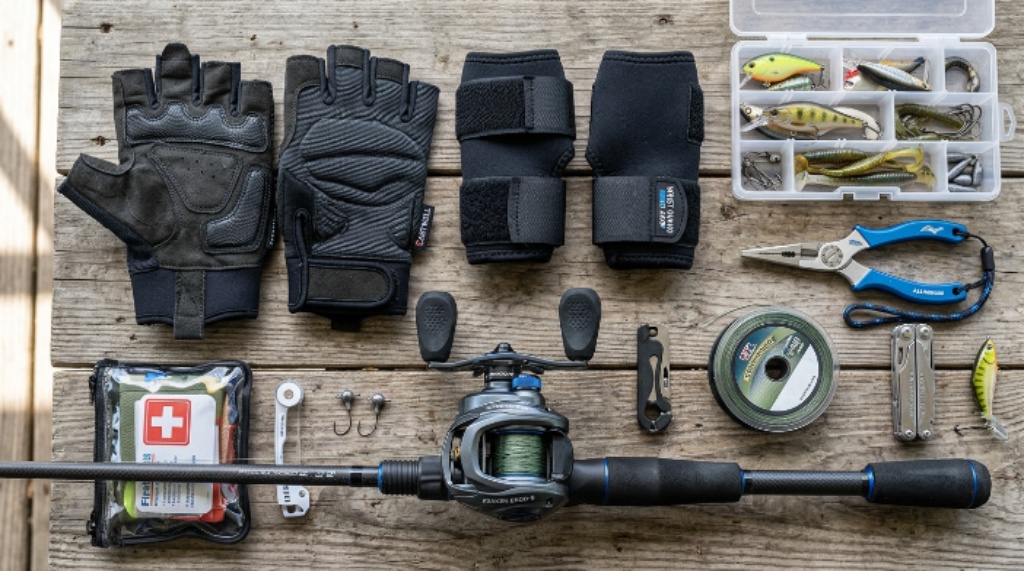
Finger guards and casting gloves protect your fingers from line cuts and reduce the grip strength needed to control your cast. Wrist supports help maintain proper alignment during repetitive reeling motions. Rod holders and rod rests let you set your rod down without bending over, which protects your lower back significantly.
Padded fishing seat cushions and folding stools with lumbar support are also worth investing in. If you fish from a bank or a boat without seating, these additions prevent hours of unnecessary strain on your spine.
Ergonomic Tackle Storage and Organization
Carrying a disorganized tackle box wastes energy and causes frustration. Constantly bending, digging, and reaching into a bag strains your back and shoulders. Therefore, how you store your gear matters just as much as the gear itself.
Switch to a tackle backpack with padded shoulder straps and a hip belt. This distributes the weight more evenly across your body rather than loading everything onto one side. Look for bags with multiple compartments at different heights so you are not constantly reaching down to find what you need.
Modular tackle systems that clip onto a belt or vest keep your most-used items at hand level. This small change reduces the number of times you bend over during a session, which directly reduces back fatigue.
Fishing Upgrades Worth Making Right Now
If you are ready to make changes today, some upgrades deliver instant results. These fishing upgrades are practical, affordable, and proven to improve comfort on the water.
- Replace your current rod grip with a foam or cork aftermarket grip that fits your hand size
- Swap standard reel knobs for larger, ergonomic paddle knobs
- Add a rod butt pad to reduce pressure on your forearm during long fights with fish
- Invest in a quality pair of polarized sunglasses with lightweight frames to reduce eye strain and neck tension
- Use a hook disgorger or fish grip tool instead of fumbling with bare hands
Each of these changes is simple. However, together they transform a painful fishing trip into a comfortable one.
Tips for Reducing Fatigue During Long Fishing Sessions
Even the best gear cannot replace good habits. A few practical adjustments during your trip can reduce fatigue significantly.
Switch your rod hand every twenty to thirty minutes if possible. This spreads the workload across both arms and delays the onset of muscle fatigue. Take short breaks to stretch your wrists, shoulders, and lower back. Stay hydrated, because even mild dehydration increases perceived effort and makes your muscles tire faster.
Additionally, adjust your casting technique. Many anglers use far more force than necessary. A smooth, controlled cast is more accurate and far less tiring than a powerful, aggressive one. Practicing proper technique is one of the most effective and free upgrades you can make.
Conclusion
Upgrading to ergonomic fishing gear is one of the best investments any angler can make. By choosing the right rod, reel, footwear, and accessories, you protect your body from the cumulative strain of long sessions on the water. Comfort fishing tools allow you to focus entirely on the experience rather than managing discomfort. Anti-fatigue accessories address the small but significant sources of pain that build up over hours of fishing. Combined with smarter habits and thoughtful fishing upgrades, these changes extend the amount of time you can spend doing what you love — without paying for it the next morning.
The water is waiting. Your body deserves gear that keeps up with your passion.
Frequently Asked Questions
What is the most important ergonomic upgrade for beginner anglers?
Start with your rod grip. A comfortable, well-fitting handle reduces hand fatigue more than almost any other single change. Look for EVA foam or contoured cork grips matched to your hand size.
Are ergonomic fishing rods significantly more expensive?
Not necessarily. Many mid-range rods now include ergonomic grips and lightweight materials as standard features. You can find a quality ergonomic rod for the same price as a conventional one if you know what to look for.
Can ergonomic gear help with existing wrist or shoulder pain?
Yes, it can reduce strain and prevent the condition from worsening. However, if you are dealing with a diagnosed injury like carpal tunnel or rotator cuff issues, consult a medical professional before continuing any repetitive physical activity.
How do I know if my current gear is causing fatigue?
If you feel soreness in your wrists, forearms, shoulders, or lower back during or after fishing, your gear may be contributing to the problem. Pay attention to your grip pressure and posture. These are usually the first clues.
Are anti-fatigue accessories only for older or injured anglers?
Not at all. Younger, healthy anglers benefit just as much from anti-fatigue accessories. Using supportive gear from the start helps prevent injury over time, rather than waiting to address it after damage is done.
Related Topics:
How to Banish Cotton Fuzz Balls from Your Clothes: A Comprehensive Guide
History of The Christmas Tree and Bringing in the Winter Greenery
