
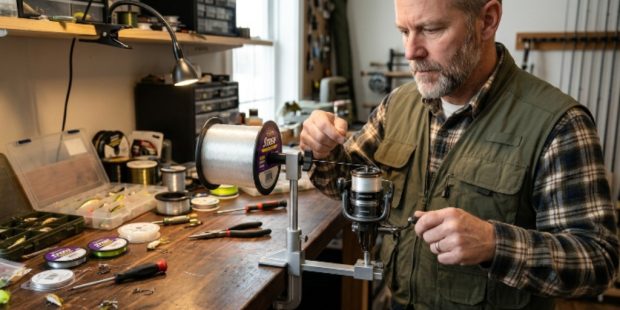
Every angler knows the frustration of tangled line, uneven spools, or a reel that just does not cast right. Most of the time, the problem started during setup. A good fishing line spooler tool solves this problem before it begins. However, with so many options on the market, choosing the right one can feel overwhelming. This guide breaks down everything you need to know so you can spool your reel cleanly, confidently, and correctly every single time.
What Is a Fishing Line Spooler Tool and Why Do You Need One?
A fishing line spooler is a small device that holds your line spool steady while you wind the line onto your reel. It controls tension and keeps the line feeding evenly. Without one, the line can twist, overlap, or dig into itself. These issues lead to wind knots, bird nests, and frustrating tangles mid-cast.
Using a spooler tool is not just for beginners. Even experienced anglers rely on them for consistent results. The tool does the mechanical work so you can focus on getting the line tight and even. Additionally, it protects your line from unnecessary stress during the spooling process, which helps the line last longer.
Types of Fishing Line Spooler Tools
Not all spooler tools work the same way. Understanding the main types helps you choose the one that fits your fishing style.
Handheld Spooler Tools
These are the most affordable and portable options. You hold the device with one hand while turning the reel handle with the other. They are compact, easy to pack, and work well for occasional use. However, they require more physical effort and can make it harder to maintain consistent tension over a full spool.
Clamp-On Spooler Stations
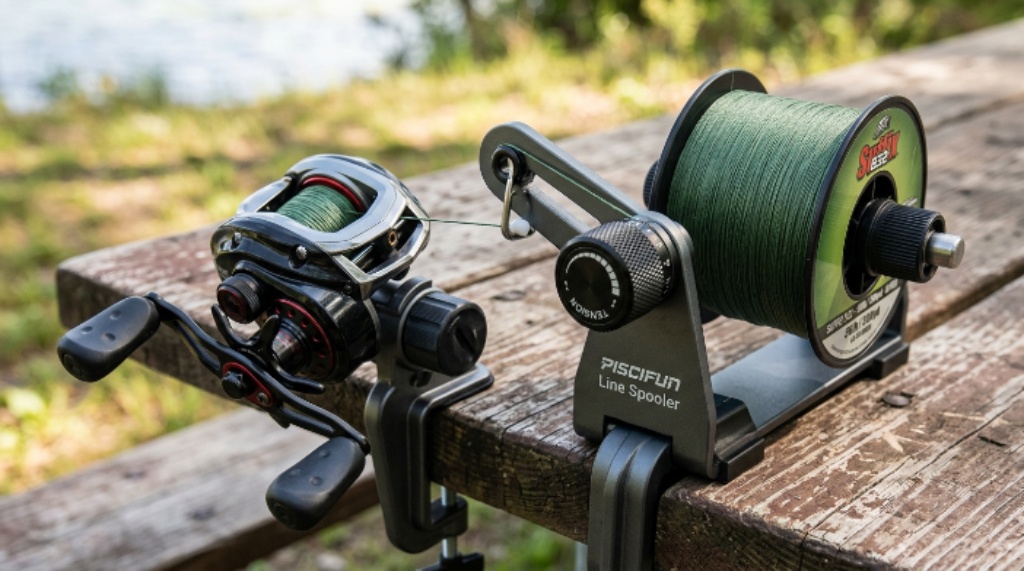
These mount to a table or the edge of a boat. They hold the line spool in place while you reel freely with both hands. This design makes it much easier to apply steady tension. Therefore, clamp-on stations are popular among anglers who spool multiple reels at once or do it frequently.
Electric Spooler Tools
Electric models use a motorized system to wind line automatically. They are fast, precise, and nearly effortless. They are also the most expensive option. For serious anglers or tackle shops that spool dozens of reels, the investment is absolutely worth it. For a casual weekend fisherman, a simpler model works just fine.
Portable Spooler Kits
These kits include a rod, tension arm, and adjustable guides in a single package. They sit on a flat surface and allow hands-free operation. Many anglers consider them the sweet spot between affordability and function.
Key Features to Look for in a Spooler Tool
Once you know the type you want, focus on the features that affect performance the most.
Tension Control
Tension is everything when spooling a reel. Too loose and the line will dig in under pressure. Too tight and the line stretches, weakening it permanently. Look for a tool with an adjustable tension knob or a friction system that lets you dial in exactly the right resistance.
Compatibility with Line Types
Not all spooler tools handle every line type equally well. Monofilament, fluorocarbon, and braided lines all behave differently. Braided line, in particular, requires firm tension to spool correctly. Make sure the tool you choose can handle the line you fish with most.
Spool Size Range
Line spools come in many sizes. A good spooler tool should accommodate small trout line spools as well as large saltwater line spools without much adjustment. Look for a universal arbor or an adjustable spindle that expands and contracts as needed.
Build Quality and Durability
Cheap plastic tools bend or crack under tension. A spooler tool made from aluminum or reinforced nylon holds up much better over time. Additionally, corrosion resistance matters if you fish in saltwater environments. Stainless steel components are a bonus in those conditions.
Portability
If you travel to fish, a compact tool that fits in your tackle bag makes life easier. Clamp-on stations are great at home but impractical on a kayak or a remote riverbank. Think about where you fish most and choose accordingly.
How Spooler Tools Affect Spinning Reel Setup
Spinning reels are the most common type of reel for freshwater fishing. They are easy to use, versatile, and forgiving for most anglers. However, they are also the most prone to line twist during a spinning reel setup if the line is not loaded correctly.
The key is to make sure the line comes off the supply spool in the same direction it goes onto the reel. A spooler tool that holds the supply spool on a horizontal axis is ideal for spinning reels. This prevents the natural curl of the line from fighting the reel. The result is a clean, twist-free spool that casts smoothly from the very first throw.
Baitcaster Spooling Tips and the Right Tool for the Job
Baitcasters are more powerful and more precise than spinning reels. However, they demand more care during the spooling process. Following proper baitcaster spooling tips starts with choosing a tool that maintains firm, even tension throughout.
Unlike spinning reels, baitcasters spool line level across the reel from side to side. A spooler tool with a line guide helps direct the line evenly without bunching on one side. Additionally, because baitcasters are prone to backlash, starting with a properly loaded spool dramatically reduces the chances of a tangle during your first cast.
Always leave about one-eighth of an inch of space between the line and the edge of the spool. Too much line creates overflow and leads to backlash. A quality spooler tool makes it easy to stop at exactly the right point.
Matching the Right Spooler Tool to Your Reel Type
Not every tool suits every reel. Here is a simple guide to help you match them correctly:
- Spinning reels — Use a horizontal-axis spooler to prevent line twist. Handheld or portable kit styles work well.
- Baitcasting reels — Use a clamp-on station with a line guide for level, even winding and consistent tension.
- Fly reels — Use a simple tension-based handheld spooler, as fly line is thick and requires less precision.
- Trolling reels — Use a heavy-duty electric or clamp-on spooler that handles large volumes of thick line.
Common Mistakes to Avoid When Using a Spooler Tool
Even with the right tool, a few bad habits can ruin a spool. Therefore, knowing what to avoid is just as important as knowing what to do.
The first mistake is spooling without wetting the line. Running a damp cloth along the line as it feeds onto the reel reduces friction and helps the line lay flat. The second mistake is ignoring line memory. Old or cheap monofilament holds the shape of its supply spool and creates coils. Stretching it slightly under tension during spooling helps reduce this.
The third mistake is rushing. Spooling too fast leads to uneven wraps. Slow down, maintain consistent tension, and let the tool do its job. Finally, do not skip checking line capacity. Overfilling a reel causes all kinds of problems. Most reels print the recommended capacity on the spool itself.
Price Ranges and What to Expect
You do not need to spend a lot to get a reliable spooler tool. Here is what to expect at each price point:
- Under $15 — Basic handheld tools. Good for beginners or casual anglers who spool once or twice a year.
- $15 to $40 — Portable kits and entry-level clamp-on stations. A solid choice for most recreational anglers.
- $40 to $80 — Quality clamp-on stations with tension control and adjustable guides. Excellent for regular use.
- Over $80 — Electric models and professional-grade stations. Best for serious anglers or anyone who spools frequently.
Conclusion
Choosing the right fishing line spooler tool makes a real difference in how your reel performs on the water. It removes guesswork, reduces line twist, and saves you from tangles that waste precious fishing time. Whether you are working through a spinning reel setup or following baitcaster spooling tips, the right tool gives you control over the entire process.
Focus on tension control, compatibility with your line type, and durability when shopping. Match the tool to the reel you use most. Start with a budget that fits your fishing frequency, and do not overcomplicate the decision. A reliable spooler tool is a small investment that pays off every single time you hit the water.
Frequently Asked Questions
Can I spool a reel without a spooler tool?
Yes, you can spool a reel by hand using a pencil through the supply spool or asking someone to hold it. However, this method makes it much harder to maintain consistent tension, which often leads to line twist and uneven wraps.
Do line spooler tools work with braided line?
Most quality spooler tools handle braided line well, but you need firm tension. Braid is slippery and compresses easily, so look for a tool with strong, adjustable tension control. Adding a mono backing to the reel before spooling braid also helps it grip the spool.
How often should I replace my fishing line?
Monofilament loses strength and develops memory after six to twelve months of regular use. Fluorocarbon lasts a little longer. Braided line can last two to three years with proper care. Re-spooling regularly keeps your setup performing at its best.
What is the best line type for a spinning reel?
Monofilament is the most forgiving and works great for beginners. Fluorocarbon offers better sensitivity and invisibility underwater. Braided line provides strength and sensitivity but requires careful spooling to avoid twist. The best choice depends on the fish you target and the conditions you fish in.
Is an electric spooler tool worth the cost?
If you spool reels frequently or manage multiple setups, an electric spooler saves significant time and effort. For the average angler who spools a reel once or twice a season, a good manual clamp-on station delivers excellent results at a fraction of the price.
Related Topics:
How to Align Golf Putter for More Accurate Putts
Best Rig for Suspended Bass: Carolina Rig or Texas Rig?
