
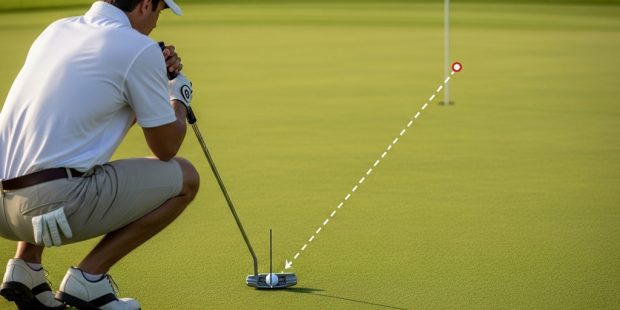
Most golfers miss putts not because of poor stroke mechanics but because the putter is not aligned correctly at address. Even a small alignment error of just one degree can send a 10-foot putt several inches offline. That means the ball never had a chance of reaching the hole.
Learning how to align your golf putter properly is one of the fastest ways to improve putting accuracy. When the face of the putter is square to the target line and your body is positioned correctly, your stroke naturally follows the intended path. This leads to more consistent contact, better roll, and fewer missed putts.
Professional golfers spend significant time working on golf alignment aids and structured putting practice. According to data published by ShotLink during PGA Tour seasons, putting accuracy within 10 feet can determine more than 35% of scoring performance in tournament play. That is why tour players rely on alignment markers, training tools, and visual checkpoints to keep their putts on line.
This guide explains exactly how to align your golf putter for more accurate putts. You will learn simple alignment techniques, the role of putting aids, common mistakes golfers make, and practical drills you can use during putting practice.
If you want to hole more putts and reduce three-putts, mastering alignment is the first step.
What Does Proper Golf Putter Alignment Mean?
Short answer: Proper putter alignment means positioning the putter face square to your target line while keeping your eyes, shoulders, and feet aligned parallel to that line.
Putting alignment has two main components:
- Putter face direction – The face must point exactly where you want the ball to start.
- Body alignment – Your stance should be parallel to the target line to allow a natural stroke path.
Research in sports biomechanics shows that the putter face accounts for the majority of direction error in putting. A study by putting coach Dave Pelz found that on a 10-foot putt, the putter face contributes nearly 83% of the ball’s starting direction. This means alignment mistakes with the face of the putter are the main reason golfers miss short putts.
When alignment is correct, the stroke becomes simpler. You do not need to manipulate the putter during impact. Instead, the club naturally travels along the intended line.
Many golfers unknowingly aim several degrees left or right of the target. Without visual references or golf alignment aids, the brain often misjudges straight lines on a green.
That is why developing an alignment routine during putting practice is essential.
Why Do Many Golfers Struggle With Putter Alignment?
Short answer: Most golfers struggle with alignment because of visual perception errors, inconsistent setup routines, and lack of alignment references.
Putting greens contain slopes, grain patterns, and shadows. These visual elements can trick the brain into seeing a different line than what actually exists.
Common reasons golfers misalign putts
- Standing too far from the ball
- Eyes positioned inside or outside the target line
- Shoulders not parallel to the target line
- Poor reading of the putting line
- No alignment marks on the ball or putter
Many amateur golfers also rush their setup. They focus more on the stroke instead of the aim. However, if the putter face starts aimed incorrectly, even a perfect stroke will miss the hole.
A 2019 putting study published in the Journal of Sports Science examined amateur golfers and found that nearly 60% of missed putts inside 8 feet were caused by poor alignment rather than stroke mechanics.
This highlights an important point: improving alignment can instantly improve putting accuracy without changing your stroke.
How Do You Align Your Golf Putter Step-by-Step?
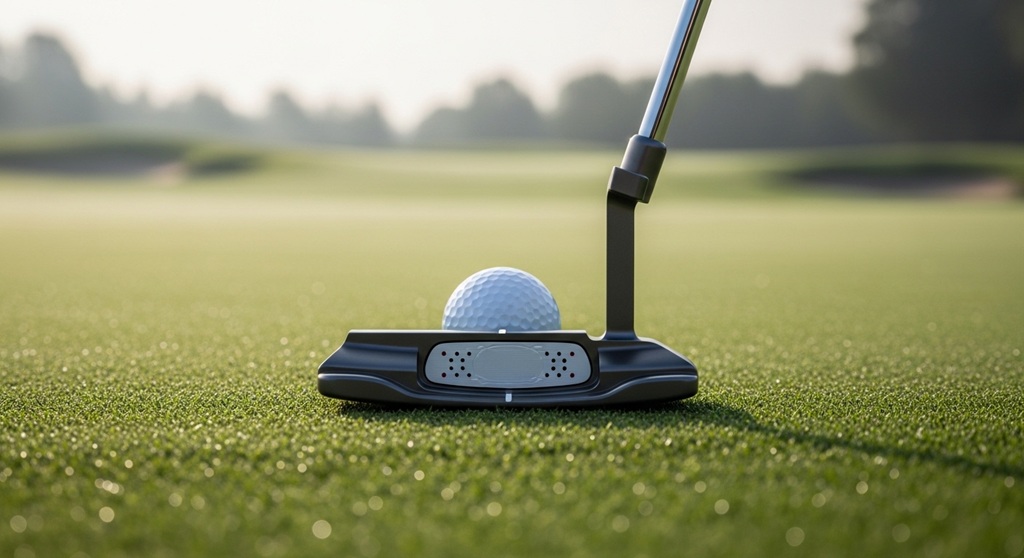
Short answer: Align the putter by selecting a target point, squaring the putter face to that point, positioning your body parallel to the target line, and confirming eye position over the ball.
Follow this simple alignment process.
Step 1: Read the Putting Line
Before addressing the ball, determine the correct path the ball should travel. Walk behind the ball and visualize the curve if the putt breaks.
Pick a specific spot about 6–12 inches in front of the ball on that line.
This spot becomes your immediate aiming reference.
Step 2: Aim the Putter Face First
Place the putter behind the ball and align the face toward the selected spot. Do not worry about your feet yet.
The putter face controls direction, so this step must come first.
Step 3: Align Your Feet and Shoulders
Once the putter face is square, build your stance around it.
- Feet parallel to the target line
- Shoulders square to the line
- Hips parallel to the line
Think of your body standing on a railroad track. The ball travels on one rail while your body stands on the other.
Step 4: Position Your Eyes Correctly
Your eyes should be either directly over the ball or slightly inside the target line.
A quick test is the “ball drop test.” Hold another ball near your eyes and drop it. If it lands on the ball below, your eye position is correct.
Step 5: Commit to the Stroke
Once alignment is set, trust the line and make a smooth stroke. Avoid making last-second adjustments.
What Are the Best Golf Alignment Aids for Putting?
Short answer: The most effective golf alignment aids include alignment sticks, putting mirrors, marked golf balls, and laser putting trainers.
Alignment tools help train the brain to recognize straight lines.
| Alignment Aid | Purpose | Best Use |
|---|---|---|
| Alignment sticks | Create visual guide for stroke path | Practice green drills |
| Putting mirror | Checks eye and shoulder alignment | Setup training |
| Line-marked golf balls | Helps aim the ball toward target | Pre-shot routine |
| Laser putting trainer | Shows exact face direction | Precision practice |
Many tour professionals use alignment markings on the ball itself. When the line on the ball points toward the intended path, it becomes easier to square the putter face.
These golf alignment aids provide instant visual feedback during putting practice.
How Do Golf Alignment Aids Improve Putting Accuracy?
Short answer: Alignment aids improve putting accuracy by providing visual feedback that trains golfers to recognize the correct aim and setup position.
When golfers practice without guidance, they rely on feel. Feel alone can be misleading.
Alignment aids create measurable references. Over time, the brain begins to recognize correct positioning automatically.
For example, a putting mirror immediately shows whether your shoulders are square. Alignment sticks show if the putter travels straight along the intended line.
Golf academies frequently use these tools because they accelerate skill development.
In a case study from a European golf coaching program, amateur golfers who practiced with alignment guides for six weeks improved their putts made from 8 feet by 22%.
This improvement came primarily from better aim and setup consistency.
What Putting Practice Drills Help Improve Alignment?
Short answer: The most effective alignment drills include the gate drill, chalk line drill, and alignment stick drill.
1. The Gate Drill
Place two tees slightly wider than your putter head.
The goal is to swing the putter through the gate without touching the tees.
This improves both alignment and stroke path.
2. The Chalk Line Drill
Draw a straight chalk line on the practice green.
Place the ball on the line and align your putter face with it.
Practice rolling the ball along the line.
If the ball stays on the chalk line, your alignment and stroke are correct.
3. Alignment Stick Drill
Place one alignment stick on the ground toward the target.
Place another parallel to it for your stance.
This creates a visual “railroad track” setup.
Many golf coaches consider this the most effective alignment training drill.
What Common Alignment Mistakes Should Golfers Avoid?
Short answer: The most common mistakes include aiming the body instead of the putter face, ignoring eye position, and skipping a consistent pre-putt routine.
- Aligning feet first instead of the putter face
- Standing too far from the ball
- Changing alignment during the stroke
- Rushing the setup
- Not using visual reference points
Another common issue is “confirmation bias.” Golfers assume they are aligned correctly because it feels right. Without visual feedback, this assumption is often wrong.
Regular putting practice with alignment guides helps eliminate these habits.
How Do Professional Golfers Ensure Accurate Putting?
Short answer: Professional golfers rely on structured routines, alignment markers, and extensive practice drills to maintain consistent aim.
Tour professionals treat putting alignment as a routine process rather than guesswork.
A typical professional routine includes:
- Reading the green from multiple angles
- Marking the ball with an alignment line
- Aligning the putter face before building the stance
- Taking one or two practice strokes
- Committing fully to the stroke
Data from PGA Tour putting statistics shows that elite players convert approximately 50% of putts from 8 feet. This success rate depends heavily on precise alignment.
Consistency, not complexity, is what makes their routines effective.
Conclusion: Build a Simple Alignment Routine for More Accurate Putts
Improving putting does not always require a major change in stroke technique. Often, the real problem lies in how the putter is aimed at address.
Learning how to align your golf putter correctly ensures the ball starts on the intended line. When combined with a smooth stroke, this leads to more consistent results on the green.
The key steps are simple:
- Read the putting line carefully
- Aim the putter face first
- Align your body parallel to the target
- Check your eye position
- Practice regularly using alignment drills
Using golf alignment aids during putting practice helps reinforce correct positioning and builds long-term consistency.
If you want to reduce missed short putts and lower your scores, start with alignment. The difference between a missed putt and a holed putt often comes down to just a few degrees of aim.
Next step: Take these alignment techniques to the practice green today. Spend 15 minutes practicing with alignment drills and observe how your putting accuracy improves.
FAQ: Golf Putter Alignment and Accurate Putting
How do you know if your putter is aligned correctly?
Check if the putter face is square to your target line and your body is parallel to that line. Using alignment aids such as a putting mirror or marked golf ball can help confirm correct positioning.
Do golf balls with alignment lines improve putting?
Yes. Golf balls with alignment lines help golfers aim more accurately by providing a clear visual reference for the intended putting line. Many professional golfers use this technique during tournaments.
Should your eyes be over the ball when putting?
Most putting coaches recommend positioning the eyes directly over or slightly inside the ball. This perspective helps golfers see the target line more accurately.
What is the best putting alignment drill?
The chalk line drill is one of the most effective drills. It trains golfers to start the ball on the intended line and provides immediate visual feedback.
Do professional golfers use alignment aids?
Yes. Professional golfers regularly use alignment sticks, putting mirrors, and ball alignment markings during practice to maintain consistent setup and aim.
How often should you practice putting alignment?
Practicing alignment for 10–20 minutes during each practice session is enough to build consistent habits. Frequent short sessions are more effective than occasional long sessions.
Does putter design affect alignment?
Yes. Many putters include alignment lines or contrasting shapes that make it easier to aim the clubface toward the target line.
Read More Also: How thermal spray can revive worn parts
Find out: How thermal spray can revive worn parts
