
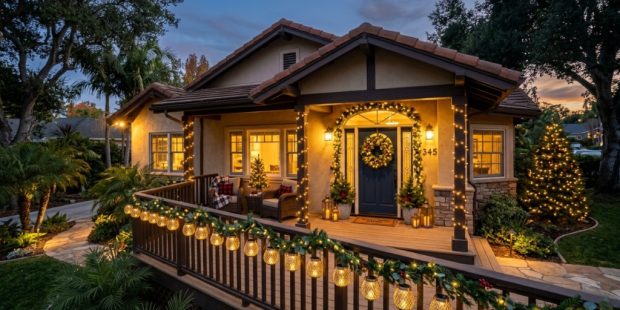
California winters bring short days and early sunsets, which means your outdoor holiday decorations only shine for a few precious hours. If you’re tired of tangled extension cords, climbing ladders to plug in lights, or watching your electricity bill spike every December, solar Christmas lanterns offer a smarter, safer, and more sustainable alternative. But buying them in California isn’t quite as simple as picking the first pretty option you see online—you need to consider coastal fog, wildfire safety rules, and how much winter sun your specific region actually gets. This guide walks you through exactly what to look for, where to buy, and how to choose solar lanterns that will actually perform through the holiday season and beyond.
Key Takeaways
- California’s varied climate—from foggy coasts to high desert—means one solar lantern design won’t work everywhere; you must match the product to your local sunlight conditions.
- Battery quality matters more than panel size for winter performance; lithium batteries outperform older NiMH cells in cold, overcast conditions.
- Fire safety rules and local ordinances may restrict where you can hang solar lanterns, especially in wildfire-prone zones (High Fire Threat Districts).
- Read product listings carefully for “full sun” claims—many lanterns sold online are tested in ideal summer conditions, not California winter daylight.
- Investing slightly more upfront in a lantern with replaceable batteries and durable materials saves money over repeatedly discarding cheap, broken units.
Why Solar Lanterns Are a Smart Choice for California Winters
California residents face a unique combination of high electricity rates (among the highest in the nation) and strong environmental awareness. Solar lanterns eliminate ongoing energy costs, but the real advantage is practical: they let you decorate without worrying about outdoor outlets, weatherproof extension cords, or timer switches. Modern solar lanterns come with built-in light sensors that automatically turn the lantern on at dusk and off at dawn—no programming needed. That’s a genuinely convenient feature for busy households during the hectic holiday season.
Another key benefit specific to California is safety. With so many homes located in or near wildfire-prone areas, reducing the number of active electrical connections outdoors lowers fire risk. Solar lanterns have no wires running across your yard or along your roofline, which also removes tripping hazards for guests. If you are looking to buy solar Christmas lanterns California, choosing battery-powered, self-contained units gives you a safe, flexible lighting solution that works even during public safety power shutoffs (PSPS events), when grid power is intentionally cut during high-wind conditions.
Understanding Sunlight Requirements for Solar Charging
Before you buy anything, you need to understand how solar charging actually works. Solar panels convert sunlight into electricity, but not all sunlight is equal. Bright, direct summer sun produces significantly more energy than the lower-angle, often overcast winter sun. In many parts of California, December and January bring short days, fog, and rain. A lantern that charges fully in July may only reach 60–70% of its capacity in December.
How Many Sun Hours Does Your Area Get?
California is not a single climate zone. San Francisco and coastal areas like Santa Cruz may receive only 4–5 peak sun hours in December, while inland areas like Sacramento or Riverside may get 5–6. The high desert around Palm Springs can still get 6+ hours of strong sun even in winter. Checking your specific city’s “peak sun hours” for December is one of the smartest steps you can take before purchasing. Simple online tools or the National Renewable Energy Laboratory (NREL) solar maps give you reliable monthly averages,
When planning an energy-efficient home setup, remember that energy needs vary significantly by household size and location—explore our guide on Why the Solar Panel System That’s Right for One Household Is Wrong for Another.
How to Choose Lanterns for Low-Light Conditions
If you live in a foggy or coastal area, prioritize lanterns with a larger solar panel (the panel area matters more than wattage specifications). Look for panels rated at 1.5 watts or higher. Additionally, choose lanterns that use lithium-ion batteries rather than older nickel-metal hydride (NiMH) batteries. Lithium batteries charge more efficiently in low-light conditions and hold their charge better in cold temperatures.
Finally, check whether the lantern has an “on/off” switch separate from the light sensor. Some economical models only have a light sensor, which can drain the battery if the lantern is exposed to artificial light at night (like a porch light or street lamp). A manual switch lets you control when the sensor is active.
Key Features to Compare Before Buying
Not all solar lanterns are created equal. Once you narrow down your search to lanterns suited to your local sunlight, the next step is comparing reliable performance indicators. You’ll need to balance appearance, durability, and function against honesty in product descriptions—unfortunately, many online listings exaggerate battery life and brightness.
When comparing options, consider these five critical factors:
- Battery capacity and type: Look for a capacity of at least 1200mAh for decent evening runtimes. Lithium-ion is preferred.
- Panel quality: Monocrystalline panels are generally more efficient than polycrystalline panels, especially in lower light.
- LED output: Check the lumens, not just “LED count.” For ambient holiday light, 10–20 lumens per lantern is sufficient. Anything over 50 lumens is quite bright and may look harsh.
- Build material: Avoid thin plastic that will crack or yellow from UV exposure. Look for ABS plastic, stainless steel, or powder-coated aluminum.
- IP rating (water resistance): You need at least IP44 (splash-proof from all directions), but IP65 or IP67 offers better protection against heavy rain or direct hose-downs.
Battery Life vs. Runtime: What the Specs Actually Mean
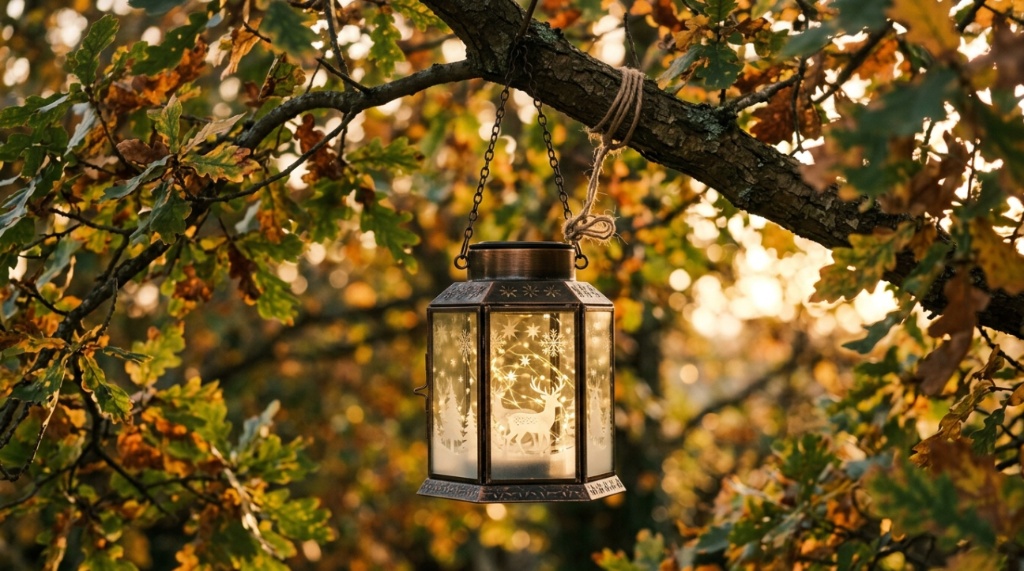
Battery capacity dictates how long the lantern can shine once fully charged. A typical 1200mAh battery powering a single 1-watt LED can run anywhere from 8 to 12 hours. However, if the lantern has multiple LEDs or uses a brighter 3-watt LED, the same battery might only last 4–6 hours. Always check the runtime claim, and read customer reviews to verify it. During California winters, you need at least 6 hours of runtime to cover the typical 5:00 PM to 10:00 PM evening window.
Light Output and Color Temperature
For Christmas aesthetics, color temperature matters. Warm white (2700K–3000K) gives off that cozy, traditional holiday glow. Cool white (4000K–6000K) looks more modern and bright but can feel harsh against colorful Christmas decorations. Many solar lanterns now offer multiple color modes (e.g., steady on, flickering flame effect, or flashing) — a nice feature for holiday ambiance, but not essential to everyone.
Where to Buy Solar Lanterns in California
You have two main options for purchasing: online or at a physical store. Each has trade-offs. Online marketplaces offer the widest selection and the best prices, but you can rarely verify the actual brightness or quality until you receive the item. Physical stores let you see the lantern in-person, but the stock is often limited to generic styles from big-box retailers.
Online Retailers and Specialty Stores
Sites like Amazon, Walmart, and specialty solar lighting stores (like Solar Lights Direct or GiftTeen) carry extensive options. When buying online, use filters for “IP65 waterproof rating” and “lithium battery.” Read recent customer reviews—not just the overall star rating—specifically for issues with winter performance. Look for photos in the reviews taken during overcast days to see how the lantern performs under real California winter light. Be wary of listing photos showing fully lit lanterns in dark settings—these are often taken with professional cameras that pick up more light than the human eye does.
Brick-and-Mortar Options (Home Depot, Lowe’s, Local Nurseries)
Home improvement stores and local garden centers stock solar lanterns seasonally, typically appearing in late October. The advantage is immediate ownership—you can test the button and see the size and materials. On the downside, the selection is usually cramped, and the staff often cannot answer specific questions about battery chemistry or peak sun hour requirements. If you buy from a local store, hold onto the receipt; the packaging often shows “works in all seasons” but the actual performance may vary.
Cost Considerations and Hidden Expenses
Solar lanterns range widely in price, from $10–$15 for flimsy disposable models to $50–$80 for durable, weatherproof units built to last. In most cases, the price difference reflects battery quality, panel efficiency, and build materials.
Think about the “cost per year” rather than the sticker price. A $15 lantern that stops working after one winter is more expensive than a $50 lantern that lasts five years. Replaceable batteries are also a big deal. If the battery dies after two years, a lantern with a user-replaceable battery (using standard 18650 cells, for example) costs $8–$12 to revive. A sealed, disposable unit must be thrown away entirely, which adds to landfill waste and your future replacement budget.
Additionally, factor in installation costs. Most solar lanterns come with a ground stake, a built-in hook, or a handle. If you plan to hang them from gutters or tree branches, you may need to purchase heavy-duty hooks, zip ties, or a hanging kit—costing another $10–$20. These are “hidden” costs that make a budget lantern much less affordable in practice.
Installation Tips for Maximum Performance
Where you place your solar lantern directly determines whether it will shine all evening or go dark by 8 PM. The solar panel needs direct sunlight during the day. Even a small amount of shade from a tree branch, a porch railing, or seasonal snow can dramatically reduce charging capacity.
Follow these placement rules for California specifically:
- Face the panel south, not west or east. South-facing panels capture the most sunlight throughout the day, especially in winter when the sun stays lower in the sky.
- Keep the panel clean. California has its fair share of dust, pollen, and coastal salt spray. Wipe the panel with a damp microfiber cloth every two weeks during the holidays to maintain peak efficiency.
- Position the lantern away from reflective surfaces. Windows, metal siding, or bright outdoor wall lights can confuse the sensor, causing the lantern to stay off at night or drain the battery early.
- Elevate the lantern when possible. Placing it on a hook or post rather than directly on the ground reduces the chance of soil splashing onto the panel during winter rains.
Frequently Asked Questions
Do solar Christmas lanterns work in the rain?
Yes, they still charge in rainy conditions, but they generate significantly less power because cloud cover reduces solar irradiance. A fully charged battery will still operate through the evening, but a lantern that relies on daily charging may only run for a few hours after consecutive rainy days. Choose lanterns with larger panels and lithium-ion batteries for better resilience during California’s wet winter storms.
Are solar lanterns allowed in California wildfire zones?
Generally yes, because they are battery-powered and do not require connection to the electrical grid. However, some local ordinances and Homeowners Associations (HOAs) have restrictions on additional structures, hanging decor, or lighting brightness. Any open-flame or candle-lit lanterns are subject to strict rules, but solar LED lanterns are almost always permissible. Always check your local fire district regulations for holidays, especially in rural or wildland-urban interface areas.
How long do solar lantern batteries actually last?
For high-quality components, the battery typically lasts 2 to 4 years before its capacity significantly degrades. Factors like extreme heat (California summer sun can cook batteries), excessive charging cycles, and deep drains can shorten lifespan. Cold winter temperatures temporarily reduce capacity but revert once the battery warms up. Look for models with replaceable batteries to extend the lantern’s total life by several years.
Can I use solar lanterns indoors?
Technically yes, but it is not recommended. Solar panels need direct outdoor sunlight to charge effectively. Placing the lantern on an indoor windowsill might provide enough light for a short runtime, but you will be disappointed with the dim output and limited evening hours. It is best to treat solar lanterns as outdoor decorations only.
What is the best brightness for a solar Christmas lantern?
For ambient holiday decoration, 10 to 20 lumens is ideal. This brightness is noticeable enough to outline a pathway or illuminate a tree, but not so bright that it washes out your other holiday lights. If you need task lighting (e.g., near an outdoor dining area), look for 30–50 lumens, but understand that higher brightness requires a bigger battery and will reduce overall runtime.
Conclusion
Buying solar Christmas lanterns in California comes down to understanding your local sun patterns, prioritizing battery quality over pretty designs, and being honest about how much maintenance you are willing to do. A thoughtful purchase—one that considers panel size, lithium-ion batteries, and IP-rated weather resistance—will serve you for many holiday seasons and survive the occasional winter storm without needing a backup generator. Measure your intended placement and note the sun exposure in that area before you buy. The best lantern for a sunny backyard in Fresno will differ from the best choice for a foggy Santa Monica balcony. Start by checking the specifications you care about most, then compare prices across reliable retailers. Your evenings will be brighter, your electricity bill unaffected, and your holiday setup significantly safer.
