
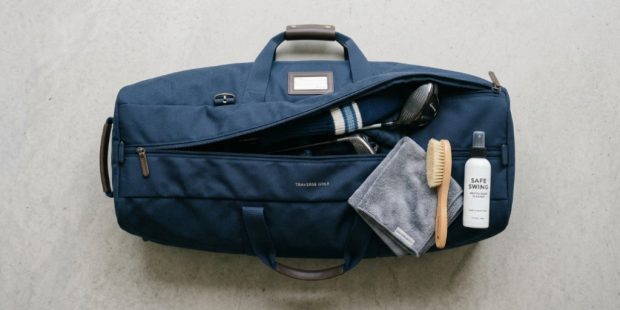
Your clubs survived the flight, the rental car trunk, and four rounds in three days. Then they sit in the garage for five months. That downtime is where a lot of avoidable damage actually happens zippers corrode, fabric mildews, and padding compresses under the weight of everything stacked on top. If you rely on soft-sided golf bag protection, the bag only works as well as the care routine behind it. Here’s how to clean, dry, and store your travel gear so it’s ready — and structurally sound for the next trip.
Quick Answer
Clean your travel bag and clubs after every trip, then store them completely dry, lightly loaded, and off the floor. Wipe down fabric and hardware with a damp cloth, air-dry the bag fully open (never folded or zipped shut while damp), remove and clean club heads and grips separately, and store everything in a cool, dry space away from direct sunlight. Moisture and compression cause most long-term wear — not the trips themselves.
Key Takeaways
- Dirt and sunscreen residue trap moisture and grit that abrade fabric and zippers, so clean gear before storing, not before your next trip.
- Never store a travel bag zipped shut while damp — trapped humidity is the leading cause of mildew, odor, and hardware corrosion.
- Remove clubs from the travel bag for long-term storage, and loosen or remove heads where the design allows.
- Store bags upright or laid flat on a shelf or rack, not compressed under other luggage or on a concrete floor.
- Inspect zippers, straps, seams, and wheels once per season so small failures get fixed before they strand you mid-trip.
Why Post-Trip Cleaning Matters More Than Pre-Trip Cleaning
Most golfers clean their gear right before a trip. That’s backwards. The residue that causes the most damage — sweat salts on grips, sunscreen and bug spray on fabric, sand in zipper teeth, moisture from a rainy final round — does its work while the bag sits unused. A bag cleaned the week before a trip has already spent weeks or months sitting dirty.
Cleaning after each trip also gives you a natural inspection window. You’re handling every strap, zipper, and seam while the trip is still fresh in your mind, which makes it easy to note what failed and what needs replacing before the next departure.
How to Clean a Soft-Sided Golf Travel Bag
Soft-sided travel bags are built from nylon, polyester, or similar woven fabrics with foam padding and plastic or metal hardware. They tolerate gentle cleaning well but degrade quickly when soaked or scrubbed aggressively.
- Empty everything. Remove clubs, shoes, towels, rangefinders, and any loose items from every pocket.
- Shake out debris outdoors. Turn the bag upside down and shake it, then reach into the corners to remove sand, grass, and range dirt.
- Vacuum the interior. A brush attachment lifts grit from seams and lining where a cloth can’t reach.
- Wipe the exterior with a damp microfiber cloth. Use plain lukewarm water first. For stubborn grime, add a drop of mild dish soap to a bowl of water — never apply soap directly to the fabric.
- Clean zippers with a soft brush. An old toothbrush works well for lifting sand from zipper teeth. Rinse the brush, not the zipper.
- Air-dry completely. Open every pocket and compartment and let the bag stand in a shaded, ventilated area. Depending on humidity, this can take 24 to 48 hours.
What to avoid: washing machines, dryers, harsh solvents, bleach, and pressure washers. Heat breaks down foam padding and coatings; harsh chemicals strip water-resistant finishes; machine agitation bends frames and stresses zippers.
Cleaning Your Clubs Before They Go Into Storage
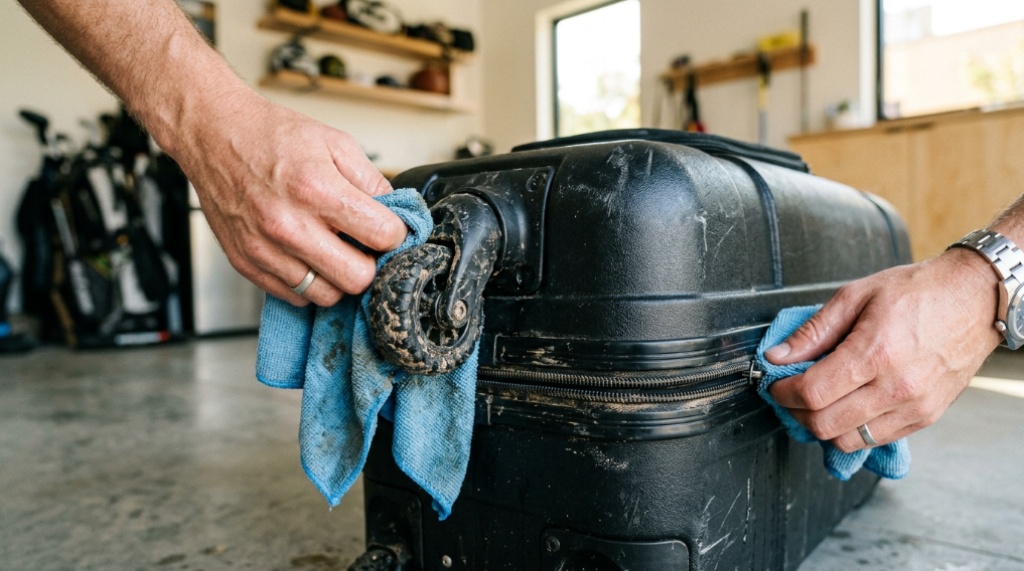
Clubs left dirty inside a travel bag for months develop rust on chrome, corrosion in hosels, and hardened grime on grips that’s much harder to remove later.
- Club heads: Scrub faces and grooves with a nylon brush and warm water. Dry immediately with a towel — don’t let them air-dry wet.
- Shafts: Wipe with a damp cloth, then dry. Check for dings or bends near the hosel.
- Grips: Wipe with a damp cloth and a small amount of mild soap. Rinse the cloth and wipe again. Let grips dry fully before returning clubs to any bag.
- Adjustable heads: If your driver or fairway woods have adjustable hosels, loosen or remove the head for storage where the manufacturer’s instructions allow. This relieves stress on the adapter and lets the shaft lie straighter.
- Headcovers: Shake out, spot-clean, and dry separately before putting them back on.
Drying: The Step Most Golfers Get Wrong
The single most common storage mistake is putting gear away while it’s still slightly damp. Even a small amount of trapped moisture inside a zipped bag creates the conditions for mildew, musty odor, and corrosion on metal hardware.
To dry gear properly:
- Open every pocket, compartment, and closure.
- Stand the bag upright or hang it if the design allows.
- Keep it out of direct sunlight, which fades fabric and can warp synthetic materials.
- Use a fan or place it in a room with good airflow if you live in a humid climate.
- Don’t rush it. If the padding still feels cool or damp to the touch, it isn’t dry.
How to Store Golf Travel Gear Between Trips
Once everything is clean and dry, storage conditions determine how the gear holds up over months of disuse.
Ideal storage conditions:
- Temperature: Cool and stable. Avoid attics and garages that swing between freezing and hot.
- Humidity: Low. Basements and damp garages are the worst places for fabric and metal.
- Light: Away from direct sun. UV degrades nylon, polyester, and rubberized coatings.
- Position: Off the floor. Use a shelf, rack, or hook — concrete floors wick moisture and invite pests.
- Load: Empty or lightly loaded. Long-term weight on padding and zippers compresses foam and stresses seams.
If your only option is a garage or basement, use a breathable cotton storage bag or a large pillowcase rather than plastic. Plastic traps moisture and is a common cause of mildew even on dry gear, Before heading to the course, make sure your equipment is fully dialed in and pick the best budget golf irons in 2026 to upgrade your game.
Common Storage Mistakes That Shorten Gear Life
- Folding the bag flat for storage. Repeated creasing weakens foam and stresses seams at fold points.
- Stacking other luggage on top. Compression flattens padding and can bend internal frames.
- Storing clubs inside the travel bag long-term. The bag isn’t designed to carry weight for months at a time.
- Leaving wet towels, gloves, or shoes in pockets. A single damp item can mildew an entire bag interior.
- Skipping seasonal inspection. Small zipper failures and seam pulls are cheap to fix early and expensive to fix mid-trip.
A Simple Seasonal Inspection Checklist
Run through this once at the end of each golf season or before any major trip:
- Zip and unzip every zipper fully. Note any that catch, skip, or separate.
- Check all seams, especially at handle and wheel attachment points.
- Inspect wheels for cracks, flat spots, or wobbly mounts.
- Test the shoulder strap and any buckles under light load.
- Look inside for mildew spots, staining, or unusual odors.
- Check club grips for hardening, slickness, or cracks.
- Verify headcovers are intact and not stretched.
Lubricating plastic zippers with a zipper-specific product (not oil or grease) extends their life meaningfully and prevents the sticking that leads to broken pulls.
Frequently Asked Questions
Can I wash a soft-sided golf travel bag in a washing machine?
No. Machine washing and drying damage foam padding, weaken seams, and can warp the internal frame. Spot-clean with a damp cloth and mild soap, then air-dry fully.
How long should a travel bag air-dry before storage?
At least 24 hours in a ventilated space, and up to 48 hours in humid conditions. If the padding still feels cool or damp, keep drying.
Is it okay to store clubs in the travel bag long-term?
It’s better to remove them. Long-term weight stresses padding, zippers, and seams, and any residual moisture inside the bag has nowhere to escape if it stays zipped.
What causes mildew inside a golf travel bag?
Trapped moisture combined with warmth and darkness. Storing a bag that isn’t fully dry, or leaving damp towels or gloves inside, is the most common trigger.
How often should I clean my golf travel gear?
After every trip, and again before long-term storage. A quick wipe-down takes minutes; letting grime and moisture sit for months causes damage that can’t be reversed.
Should I use plastic bags to protect stored gear?
No. Plastic traps moisture and encourages mildew. Breathable cotton covers or open storage in a dry space are far safer.
Conclusion
Protecting golf travel gear comes down to three habits: clean it after every trip, dry it completely before putting it away, and store it in a cool, dry spot without long-term weight on the bag. Those steps cost you maybe 20 minutes per trip and can add years of usable life to a soft-sided travel bag, set of clubs, and headcovers. When your next trip comes around, everything is ready to pack instead of ready to repair.
