
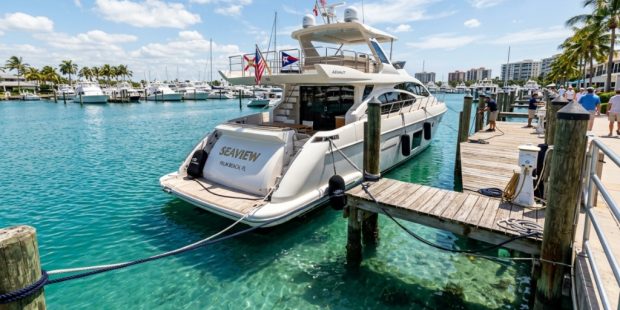
Docking a boat in Florida comes with its own set of challenges. Between the intense summer sun, sudden afternoon thunderstorms, relentless tidal currents, and the constant threat of tropical storms, your dock lines are the only thing standing between your vessel and disaster. Many boat owners make the mistake of using whatever rope is cheapest or leftover from a previous boat, only to find themselves dealing with chafed lines, snapped cleats, or a boat that has drifted into a neighbor’s hull. Selecting the right dock lines isn’t just about picking the thickest rope you can find; it requires understanding the specific environmental stresses unique to Florida waters and matching the line’s construction to your boat’s size and docking situation. This guide breaks down exactly what you need to consider so you can secure your investment with confidence and choose the best strong dock lines Florida boaters rely on for durability and peace of mind.
Why Florida Conditions Demand More From Your Dock Lines
Florida is not a typical boating environment. The combination of high UV exposure, warm saltwater, and frequent high winds creates a perfect storm for line degradation. A standard nylon line that might last five years in the Pacific Northwest could fail in two seasons in the Florida Keys. Understanding these stressors is the first step in making an informed purchase.
The Impact of UV Radiation and Heat
The Florida sun is relentless. Ultraviolet (UV) rays break down the polymer chains in synthetic ropes, leading to a chalky appearance, stiffness, and a significant loss of breaking strength. Heat accelerates this chemical breakdown. When a line is exposed to direct sunlight for hours every day, the outer fibers become brittle and prone to abrasion. You should inspect lines for a faded or fuzzy appearance, as this indicates the protective outer layer is degrading. This is why choosing a line with UV inhibitors or a braided cover that protects the core is critical for longevity in this climate.
Tidal Shifts and Storm Surge
Unlike inland lakes, Florida’s coasts experience significant tidal ranges. A line that is too tight at low tide can snap when the tide rises and the boat lifts. Conversely, a line that is too loose at high tide allows the boat to drift dangerously far from the dock. Furthermore, the “summer afternoon storm” is a daily occurrence during the wet season. These microbursts can produce wind gusts exceeding 40 knots in a matter of minutes. Your dock lines must have enough elasticity to absorb these shock loads without transferring the full force to the cleats.
Material Matters: Nylon vs. Polyester vs. Polypropylene
Not all ropes are created equal. The material determines the line’s stretch, strength, and resistance to the elements. For dock lines, you are generally choosing between three main materials.
Nylon: The Standard for Shock Absorption
Nylon is the industry standard for dock lines for a very good reason: it has excellent elasticity. It can stretch up to 30% under load, which allows it to absorb the jerking motion of waves and wind. This “give” is essential in Florida, where a boat is constantly being pushed by currents and gusts. However, pure nylon loses strength when wet and is susceptible to UV damage. You should look for nylon lines that are specifically treated for UV resistance or have a braided cover to protect the core from the sun.
Polyester: Low Stretch and High Durability
Polyester is a better choice if you want minimal stretch. It is stronger than nylon when wet and has superior resistance to UV degradation and abrasion. The trade-off is that it does not absorb shock as well. Polyester lines are ideal for permanent moorings or for boats docked in areas with minimal wave action, but they can be unforgiving in a surge. If you use polyester, you need to ensure your fenders are doing the heavy lifting to prevent the boat from slamming against the dock.
Polypropylene: The Budget Option to Avoid
Polypropylene floats, which makes it useful for tow ropes or water skiing, but it is a poor choice for dock lines. It has very low strength, degrades rapidly in sunlight, and offers almost no stretch. While it is cheap, you will likely replace it multiple times a season in Florida. It is best to avoid this material entirely for securing your vessel.
Construction Types: Three-Strand vs. Braided
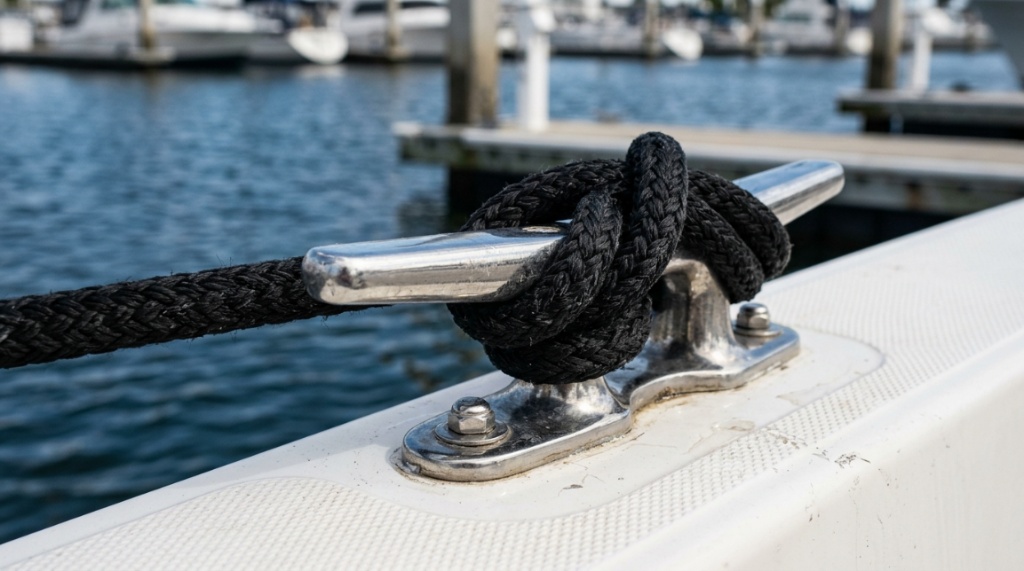
Beyond the material, the way the rope is constructed affects its handling and performance. You will primarily encounter two types of construction.
Three-Strand Twist
This is the classic, traditional dock line. It is easy to inspect for damage, splices well, and has a rougher texture that grips cleats well. Three-strand nylon is very forgiving and offers excellent shock absorption. However, it can be stiff and harder on your hands when handling. It also tends to pick up dirt and sand, which can act as an abrasive against the deck.
Double-Braid (Braided)
Double-braid lines feature a braided core inside a braided cover. This construction is stronger and more resistant to abrasion than three-strand. The smooth cover is easier on your hands and the boat’s gel coat. For Florida, a double-braid nylon line offers the best of both worlds: the elasticity of nylon with the durability of a protective outer layer. The downside is that they are more expensive and can be harder to splice, but the longevity often justifies the cost.
Determining the Correct Diameter and Length
Using a line that is too thin is dangerous, but using one that is excessively thick is unnecessary and makes handling difficult. The correct size depends on your boat’s length and weight, Before securing your vessel with heavy-duty ropes, it is essential to understand your hardware—start by learning What are the most important boat components? to ensure your entire mooring system is up to the task.
Diameter Guidelines Based on Boat Length
As a general rule, you should match the diameter of the line to the size of your boat. For a boat under 25 feet, a 1/2-inch line is usually sufficient. For boats between 25 and 40 feet, you should step up to 5/8-inch. Vessels over 40 feet typically require 3/4-inch or larger lines. It is also wise to match the line size to the size of your cleats. A line that is too small for a large cleat can slip, while a line that is too large for a small cleat will not sit properly.
Length and Scope Considerations
You need enough line to create a proper angle from the cleat to the dock. A line that runs straight down is ineffective and puts immense strain on the cleat. You want a horizontal angle of about 45 degrees. This means you need lines that are long enough to reach from your bow or stern cleat to the dock cleat with some slack for the tide. A good rule of thumb is to have lines that are at least two-thirds the length of your boat. For a 30-foot boat, you should have lines that are at least 20 feet long to allow for proper adjustment.
Essential Hardware: Cleats, Chafe Guards, and Fenders
A strong line is useless if the hardware it attaches to fails or if the line chafes through on a sharp edge. In Florida’s dynamic conditions, you must pay attention to the entire system.
Chafe Protection is Non-Negotiable
Chafing is the number one cause of dock line failure. The constant rubbing of the line against the edge of the dock, the toe rail, or a rough cleat will wear through the outer fibers quickly. You must use chafe guards—either tubular nylon sleeves or leather wraps—at any point where the line touches a hard surface. This is not an optional accessory; it is a necessity for survival in a tidal environment where the boat is constantly moving.
Cleat Selection and Mounting
Your cleats must be through-bolted with backing plates, not just screwed into the fiberglass. A 5/8-inch line can exert thousands of pounds of force in a storm. If the cleat is not properly secured, it will rip out of the deck, taking the line with it. Inspect your cleats for cracks or corrosion, and ensure they are large enough to accommodate the diameter of your new lines.
Step-by-Step Guide to Tying Secure Dock Lines
Having the right line is only half the battle; you need to know how to tie it. The cleat hitch is the standard knot for docking, but it must be tied correctly to be secure.
- Wrap the line around the base of the cleat: Bring the line around the horn of the cleat that is farthest from the load.
- Cross over the top: Bring the line over the top of the cleat and wrap it around the opposite horn.
- Create a second figure-eight: Repeat the process, wrapping around the first horn again, creating a figure-eight pattern.
- Secure with a half-hitch: Take the loose end and tuck it under the last wrap on the cleat, pulling it tight to lock the line in place.
This knot is easy to release quickly, even under load, which is essential if you need to leave the dock in a hurry during a storm.
Common Mistakes to Avoid
Even experienced boaters make errors that compromise their docking setup. Being aware of these common pitfalls can save you from costly damage.
- Using lines that are too long: Excess line creates a trip hazard and allows the boat to move too much. Use the shortest length that allows for proper tide movement.
- Ignoring chafe points: Failing to inspect lines for wear where they pass over the gunwale is a recipe for a snapped line at 3 AM.
- Forgetting to adjust for tide: Setting your lines for high tide and leaving them means your boat will be hanging by the cleats at low tide, or floating too high at high tide.
- Not using enough lines: Relying on a single bow and stern line is insufficient. You need spring lines to prevent forward and backward movement.
Frequently Asked Questions
How often should I replace my dock lines in Florida?
You should inspect your lines every month. With high UV exposure, you should plan to replace them every 2 to 3 years, even if they look okay. If you notice stiffness, fraying, or a chalky residue, replace them immediately.
Can I mix nylon and polyester lines on the same boat?
Yes, you can, but you should be aware of the different stretch characteristics. Using a low-stretch polyester line for a spring line and a stretchy nylon line for a bow line can be effective, but ensure the loads are balanced to prevent one line from taking all the stress.
What is the best knot for a dock line?
The cleat hitch is the most reliable and quickest to release. The bowline knot is also useful for creating a loop at the end of the line to slip over a piling, but the cleat hitch is the standard for securing to a dock cleat.
Should I use rope or chain for a permanent Florida mooring?
For a permanent mooring, a combination is often best. A heavy chain at the anchor or mooring ball prevents chafing on the bottom, and a nylon line from the chain to the boat provides the necessary shock absorption.
Conclusion
Selecting the right dock lines for your Florida boat is a critical maintenance task that directly impacts the safety of your vessel. The harsh sun, corrosive saltwater, and unpredictable weather demand that you prioritize materials like UV-treated nylon for shock absorption and double-braid construction for durability. Remember to match the line diameter to your boat size, always use chafe guards, and tie proper cleat hitches. By investing in quality lines and inspecting them regularly, you are not just buying rope; you are buying peace of mind that your boat will be safe when the next squall line rolls through. Take the time to assess your current lines today and upgrade where necessary to ensure your boat is ready for whatever Florida weather throws its way.
