
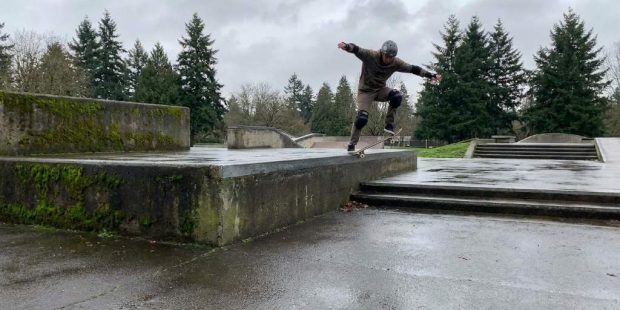
Big drops hurt knees during skateboarding in Portland, OR because landing creates intense compressive and twisting forces. A hard landing can load the knee several times above body weight within seconds. Skateboarding also causes thousands of emergency department visits annually, making landing technique and protective equipment important. Wearing impact resistant skate shoes can also improve stability during demanding landings.
Key Takeaways
- Big drops multiply landing forces through the ankles, knees, hips, and lower back.
- Deep knee flexion helps absorb impact before force reaches sensitive structures.
- Wet Portland pavement can reduce traction and disrupt landing control.
- Strong quadriceps, hamstrings, glutes, and calves improve landing stability.
- Progressive drop training works better than repeatedly attempting maximum-height drops.
- Persistent swelling, instability, or sharp pain deserves professional medical evaluation.
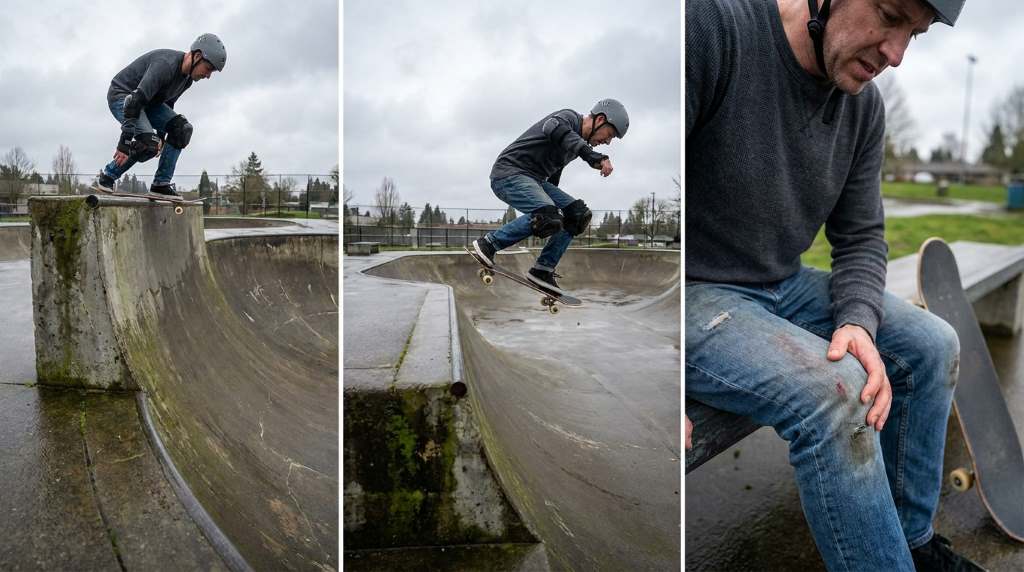
What Happens Inside Your Knees During a Big Drop?
A big drop converts vertical height into kinetic energy before your wheels contact the ground. Your body must then absorb that energy almost immediately. Consequently, your knees become major shock absorbers during the landing sequence.
Your ankles usually contact the landing forces first, followed by your knees and hips. Ideally, each joint bends smoothly and shares the workload. However, stiff legs transfer more force directly toward the knee joint.
When you land too upright, your quadriceps must control rapid knee bending under heavy resistance. That demand can increase pressure around the kneecap and surrounding tissues. Meanwhile, poor alignment can push the knee inward or outward during compression.
Rotation creates another problem because your foot may remain planted while your body turns. This movement can stress ligaments and cartilage within the knee. Therefore, straight tracking matters as much as simple knee bending.
Why Landing Height Changes Everything
Higher drops give your body more energy to manage during impact. Even a small increase in height can make poor technique much less forgiving. Therefore, skaters should increase drop height gradually rather than chasing dramatic jumps.
Your landing surface also changes the equation. Smooth concrete provides little forgiveness, while rough surfaces can create unpredictable wheel behavior. Portland’s varied skate terrain makes surface awareness especially important.
How Portland Conditions Can Make Knee Impact Worse
Portland’s wet weather can make skateboarding surfaces significantly more unpredictable. Moisture reduces traction and can change how wheels respond during approach and landing. Skaters should understand these conditions before attempting demanding drops.
Before riding, check the surface for standing water, damp patches, leaves, moss, and loose debris. These hazards can make your board slide when your body expects predictable grip. budget skating costumes may look unrelated, but clothing choices also affect movement.
Loose or restrictive clothing can interfere with knee movement during deep landings. Choose clothing that allows unrestricted squatting and quick balance corrections. Good mobility helps your body respond when a landing feels slightly different.
Portland’s sidewalks and street spots can also contain cracks, seams, and uneven transitions. These features may alter your wheel contact immediately after landing. As a result, knee loading can become uneven across both legs.
Why Wet Concrete Deserves Extra Respect
Wet pavement creates a different risk from simple impact force. Your wheels can lose predictable traction before your knees even begin absorbing the landing. Consequently, postponing large drops during wet conditions often represents the smarter choice.
If the surface feels questionable, test it with controlled low-speed movements first. Avoid treating familiar terrain as automatically safe after rainfall. Conditions can change quickly across shaded, exposed, and covered sections.
Which Landing Mistakes Put the Most Stress on Knees?
Most painful landings do not come from height alone. Instead, several small technique errors can combine during one high-force impact. Recognizing these mistakes gives skaters practical ways to reduce unnecessary knee loading.
Landing With Straight Legs
Straight-legged landings leave fewer joints available for energy absorption. Your knees then experience a sharper force spike instead of gradual deceleration. Bend your knees and hips immediately before wheel contact.
Your torso should remain controlled while your knees track toward your toes. Avoid collapsing excessively because extreme flexion can create another source of stress. Aim for a strong, athletic landing position instead.
Letting the Knees Collapse Inward
Knees moving inward during impact can compromise lower-body alignment. This position may increase unwanted stress around the knee and hip. Keep your knees aligned with your feet throughout the landing.
Weak hip muscles often contribute to this movement pattern. Strengthening the glutes can improve control during deeper landings. Practice slow squats while watching your knee alignment in a mirror.
Landing Too Stiff or Too Deep
Stiff landings create excessive impact, while extremely deep landings can overload the knee. Neither extreme provides efficient force management. Instead, use controlled flexion that matches the drop and your skill level.
Experienced skaters often make landing adjustments instinctively. Beginners should develop that response through progressive drills. The hardest trick on a skateboard should never become the starting point.
How to Train Your Knees for Bigger Skateboard Drops
Strong knees depend on more than isolated knee exercises. Your entire lower body must coordinate force absorption during landing. Therefore, train the muscles that control your ankles, knees, hips, and trunk.
Build Landing Strength
Start with bodyweight squats and controlled reverse lunges. Progress toward split squats, step-downs, and loaded squats as your control improves. Keep every repetition smooth rather than chasing maximum weight.
Hamstring training also deserves attention because these muscles help control knee movement. Glute exercises can improve hip stability during landing. Calf raises strengthen the muscles that help manage initial ground contact.
Practice Landing Mechanics
Begin with small drops where technique remains completely manageable. Focus on quiet wheel contact, bent knees, balanced hips, and stable shoulders. Increase height only after your movement remains consistent.
Film your landings from the front and side when possible. Video can reveal knee collapse, excessive forward lean, or stiff contact. Correct one movement fault before adding more height.
Use Recovery as Part of Training
Your knees need recovery after repeated high-impact sessions. Avoid stacking several demanding drop sessions without adequate rest. Instead, alternate technical riding with strength work and easier sessions.
Pay attention to swelling, persistent soreness, clicking with pain, or a feeling of instability. These symptoms can indicate an injury rather than normal training fatigue. Stop aggressive riding and seek qualified medical assessment when symptoms persist.
How Footwear and Equipment Affect Landing Control
Footwear cannot eliminate landing forces, but appropriate shoes can support stability and board control. Look for secure heel fit, reliable grip, and enough cushioning for your riding style. Avoid excessively worn soles because reduced traction can compromise landing confidence.
Knee protection can also provide valuable protection during falls. However, protective equipment should complement technique rather than replace it. Your primary defense remains controlled progression, sound mechanics, and sensible terrain selection.
Helmet use remains particularly important because large drops increase fall consequences. Wrist guards may also help during unexpected forward falls. Choose equipment that fits securely without restricting your movement.
When Should You Stop Riding Because of Knee Pain?
Not every ache indicates a serious injury, especially after unusual training volume. However, sharp pain during landing should never become something you simply tolerate. Pain that changes your movement deserves immediate attention.
Stop riding when your knee becomes unstable, significantly swollen, or painful during ordinary walking. Continuing through these symptoms can increase stress on already irritated tissues. A sports medicine professional can evaluate symptoms and recommend appropriate rehabilitation.
Do not use pain medication to mask symptoms before another high-impact session. That approach can hide warning signals your body needs you to notice. Instead, allow recovery and address the underlying movement problem.
A Smarter Portland Approach to Big Drops
Large drops reward precision more than bravery. Before attempting one, inspect the approach, landing zone, weather, and your current physical readiness. A controlled decision often prevents an avoidable knee injury.
Use this simple pre-drop checklist:
- Surface: Confirm dry, predictable traction throughout the landing zone.
- Approach: Verify enough speed and space for controlled board positioning.
- Technique: Rehearse the landing motion before increasing drop height.
- Body: Avoid riding hard when your knees already feel fatigued.
- Progression: Increase difficulty only after repeated successful landings.
- Exit: Know where you can safely roll away after landing.
After your session, store your board somewhere dry and organized. A skateboard wall rack can keep equipment safely positioned between sessions. That simple habit can also protect your board from unnecessary damage.
The Bottom Line for Safer Big Drops
Big drops hurt knees because landing forces arrive quickly and demand precise lower-body control. Height, landing stiffness, rotation, poor alignment, fatigue, and slippery surfaces can amplify those forces.
Fortunately, skaters can reduce unnecessary knee stress through progressive practice and stronger movement mechanics. Start smaller, bend intelligently, maintain alignment, and respect Portland’s changing surfaces.
Most importantly, do not measure progress by the biggest drop you survive. Measure it by how consistently you land with control, balance, and minimal pain.
If your goal involves bigger drops, build the necessary strength before increasing height. Inspect every landing area carefully and treat wet conditions as a serious warning. Then progress gradually while listening closely to your knees.
Frequently Asked Questions
Why do my knees hurt after landing a skateboard drop?
Landing can expose your knees to high compressive forces, especially when you land stiffly or misalign your legs.
Are bigger skateboard drops always worse for knees?
No, larger drops create more impact energy, but strong technique can distribute that energy more effectively.
Does bending your knees protect them during skateboard landings?
Yes, controlled knee and hip flexion helps your body absorb impact over a longer movement.
Should I skateboard on wet pavement in Portland?
Generally, avoid demanding tricks on wet pavement because reduced traction makes landings less predictable.
When should skateboarders see a doctor for knee pain?
Seek medical evaluation when pain persists or involves swelling, instability, significant weakness, or painful movement.
Conclusion
Big drops become safer when you treat landing mechanics as a skill rather than an afterthought. Build strength, practice progressively, inspect Portland surfaces, and respect pain signals. Start with manageable drops today, then earn greater height through consistent control.
