
Choose a Fishing Line Spooler Tool for Perfect Reel Setup.Standing in the fishing aisle staring at hundreds of rods is overwhelming. You know you want to start fishing, but every rod looks slightly different, and the terminology on the packaging—length, power, action, line rating—might as well be another language. The truth is, choosing the wrong setup can turn a relaxing day on the water into a frustrating tangle of line and missed bites. The good news? You don’t need a dozen rods or a massive budget to get started. You just need to understand two key specifications: length and power. This guide breaks down exactly what those numbers mean, which combos work best for beginners, and how to match your gear to the fish you actually want to catch. Before diving into the technical differences between a medium-heavy and a medium-light rod, it helps to understand the full picture of what fishing rod and reel should a beginner use to avoid costly mistakes down the line.
Key Takeaways
- For your first setup, a 6’6″ to 7’0″ medium-power rod is the most versatile and forgiving choice for freshwater fishing.
- Rod power determines how much weight is needed to bend the rod, directly influencing lure size and fish-fighting capability, not casting distance.
- Rod length affects casting distance and leverage; shorter rods offer accuracy, while longer rods provide greater casting range.
- A medium-power, fast-action spinning combo paired with a 2500-size reel is the safest, most adaptable recommendation for beginners targeting bass, trout, and panfish.
Understanding Rod Power: The Backbone of Your Setup
Rod power, often labeled as Ultra-Light, Light, Medium, Medium-Heavy, or Heavy, describes the rod’s resistance to bending. It indicates the amount of force required to flex the rod tip. This spec dictates the range of lure weights the rod can cast effectively and the size of fish it can handle without snapping. Choosing the correct power is not about strength in a muscular sense; it’s about matching the rod’s resilience to your target species and the tackle you are throwing.
Why Medium Power Is the Universal Starting Point
A medium-power rod is the standard recommendation for novice anglers, and for good reason. It provides a balanced compromise between the sensitivity of lighter rods and the backbone of heavier ones. With a medium-power rod, you can comfortably fish with lures ranging from 1/4 to 5/8 ounces, which covers a massive portion of standard freshwater lures like spinnerbaits, jerkbaits, and Texas-rigged plastics. This power rating also offers enough give to protect light line when fighting a fish that makes a sudden run, while still possessing the stiffness to drive a hook home on a solid strike.
Think of a medium-power rod as the “Goldilocks” option. It is forgiving enough for a beginner learning to cast, yet capable enough to handle a feisty 3-pound bass or a scrappy walleye. Choosing a heavy rod first often results in poor casting performance with lighter rigs, while an ultra-light rod limits you to only small fish and light line.
Rod Length: Casting Distance vs. Control
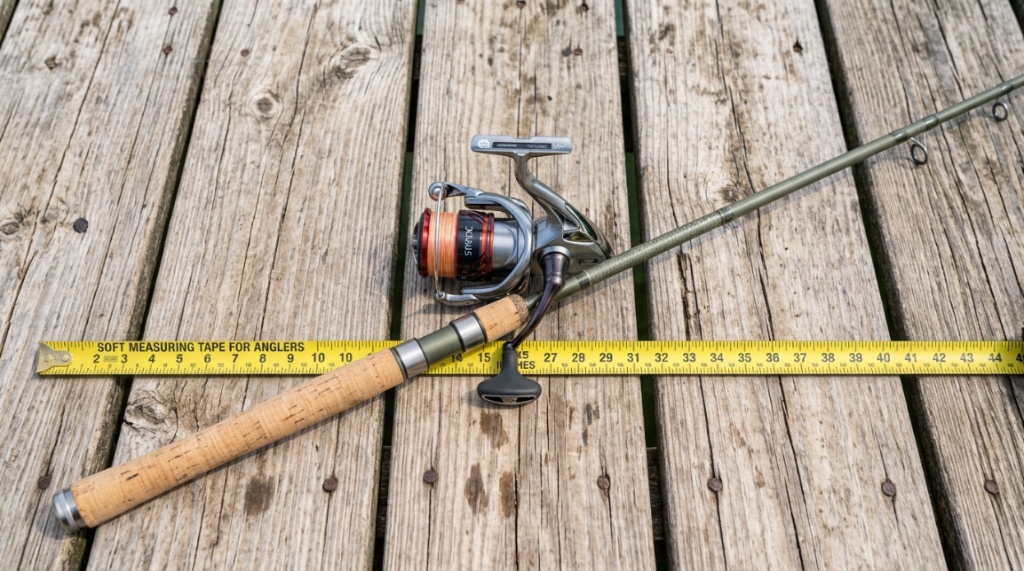
Rod length influences two primary aspects of fishing: casting distance and control. Longer rods (7’+) generate longer casts due to increased leverage and line speed. They also allow for better line management, making it easier to “bow” the rod and mend line in moving water.
Shorter rods (6′ and under) offer superior accuracy. They provide reduced leverage, which often allows anglers to hook fish more effectively due to a shorter length of line between the rod tip and the hook. They are easier to maneuver in confined spaces, making them ideal for vertical jigging or flipping heavy cover where precision is paramount.
How Length Affects the Beginner Experience
For absolute beginners, a rod in the 6’6″ to 7’0″ range is the sweet spot. This length provides enough reach to make solid casts from the bank or a dock without being so long that it becomes unwieldy. A 6’6″ rod is noticeably more forgiving for beginners who are still honing their timing and may accidentally “whipping” the rod too hard on the cast.
Matching Power to the Fish You Target
The best way to determine rod power is to work backward from the fish species and the presentation style. Do not buy a rod because it looks impressive; buy it because it is rated to handle the weight of the hooks and sinkers you plan to use. Using the wrong power rating leads to missed hooksets or thrown lures. If the rod is too stiff for the lure weight, you will lose the parabolic flex needed to keep tension on the line during the cast. If it is too soft, the rod will not have enough resistance to set a treble hook into a hard-mouthed fish.
- Ultra-Light (UL): Best for trout, crappie, and small panfish. Lures: 1/32 to 1/8 oz.
- Medium-Light (ML): Ideal for walleye, smallmouth bass, and finesse fishing. Lures: 1/8 to 3/8 oz.
- Medium (M): The do-it-all choice for largemouth bass, catfish, and larger trout. Lures: 1/4 to 5/8 oz.
- Medium-Heavy (MH): Best for heavy jigs, frogs, and punching thick vegetation. Lures: 3/8 to 1 oz.
- Heavy (H): For big catfish, musky, and saltwater species. Lures: 1 oz and up.
This chart is not gospel, but it provides a reliable starting baseline. Many beginners make the mistake of buying a medium-heavy rod because they think they might catch something “big one day.” This logic often backfires because the rod’s stiffness makes casting small finesse baits tiresome and reduces the action of smaller lures, resulting in fewer bites overall, For a hassle-free experience on the water, ensure your reel is properly prepped by checking out our guide on how to Choose a Fishing Line Spooler Tool for Perfect Reel Setup.
Action vs. Power: What’s the Difference?
While power refers to the rod’s overall strength, action describes where the rod bends when pressure is applied. A fast-action rod bends mostly in the top third, while a moderate-action rod bends more toward the middle of the blank. These are distinct attributes, but they work together to determine rod performance. A fast-action rod provides more sensitivity and allows for quicker hooksets with single-hook lures like jigs or plastic worms. A moderate-action rod is more forgiving, making it easier to keep treble-hook baits pinned during a fish’s head shake.
Reel Size and Line Rating: Crucial Nuances
The rod blank is only half the puzzle. Every rod has a specified lure weight range and a line rating (e.g., 6-12 lb test). To get the best casting performance, the reel you attach must balance the rod physically and spool the appropriate line. Pairing a large, heavy baitcasting reel with a light spinning rod shifts the balance point, causing the rod to feel heavier than it is and increasing wrist fatigue.
For a beginner, a spinning reel sized 2500 to 3000 is the standard match for a 6’6″ or 7’0″ medium-power rod. The 2500 series is small and light, holding sufficient 8 to 10-pound monofilament or braid for most freshwater situations. Balance is key: hold the rod handle, and the reel should sit comfortably in your hand without tipping the rod forward or backward excessively. If the rod tip flops downward when you hold it, the reel is too heavy.
Setting Up for Success with Line
Do not use line that exceeds the rod’s rating. A medium-power rod rated for 10-pound line will have guides spaced and sized for thinner diameters. Spooling it with 20-pound braid can cause the line to coil and bind on the guides, reducing casting distance. More importantly, the rod blank is designed to break before the line reaches its tensile limit in many cases.
Storing and Handling Your Gear
Once you have selected your gear, keeping the equipment safe is crucial. Beginners often store rods incorrectly—leaning them against walls under pressure or stuffing them into overhead compartments without releasing the line tension. Always loosen the drag on your reel before storing it to prevent the drag washers from taking a ‘set’. When traveling, rod sleeves or multi-piece rods are a smart investment to prevent tip breakage. Never leave your rod in a hot car for extended periods, as heat can warp the blank and compromise the rod’s action. These simple habits will extend the life of your starter gear and preserve its sensitivity.
Frequently Asked Questions
Is a longer rod better for casting further?
Yes, generally speaking, a longer rod will cast further than a shorter rod of the same power and action. The increased length generates higher tip speed, imparting more velocity to the lure. If you are fishing from a wide-open bank or shore, a 7’0″ rod will outperform a 6’0″ rod for distance.
Can I use a medium-heavy rod for small fish?
You can, but it is not ideal. A medium-heavy rod requires heavier lures to load correctly. Casting a light inline spinner or a small crankbait is challenging because the rod blank won’t flex enough to transfer the energy effectively. You will likely lose sensitivity and feel fewer bites.
What is the easiest rod to cast for a beginner?
Spinning rods are easier to cast than baitcasting rods for beginners because they lack the mechanical spool that causes birdnests or backlash. A 6’6″ medium-power spinning rod is generally the easiest to learn with, offering good casting characteristics and sufficient forgiveness.
Should I buy a rod and reel combo to save money?
Yes, purchasing a combo is often the best approach for beginners. Manufacturers like Ugly Stik, Daiwa, and Shimano build combos that are pre-balanced and matched for specific applications. They offer excellent value and remove the guesswork from matching a rod and reel with accurate specifications.
Conclusion
Choosing your first rod does not have to be a source of stress. Keep the focus on a medium-power, fast-action rod in the 6’6″ to 7’0″ range. This setup will offer enough backbone to fight average-sized bass and walleye, yet provide enough flex to use the lightweight lures that fill a beginner’s tackle box. Pair that rod with a quality 2500-size spinning reel, spool it with 8-pound monofilament, and you have a versatile, honest setup capable of catching a wide array of species.
