

You’ve seen them stacked on car roofs and carried effortlessly under one arm. Lightweight inflatable paddle boards have completely changed how paddlers think about getting on the water. But that portability often comes with a nagging question: does a board you can carry like a backpack actually perform well, or are you trading durability and stability for convenience? The answer depends on your paddling style, your physical needs, and your storage situation. This guide breaks down the real trade-offs, performance factors, and decision criteria so you can determine if a featherweight board is a smart investment or a compromise you will regret.
Key Takeaways
- Lightweight boards (typically 15–18 lbs) excel in portability, travel, and ease of handling, but they are often less rigid than heavier models, which can impact speed and handling in choppy water.
- Construction changes such as drop-stitch density and PVC layer weight determine weight savings; a lower weight per square foot often means a softer deck underfoot.
- Your physical strength, storage constraints, and how far you must carry the board are just as important as on-water performance when choosing a board weight.
- Lightweight boards are extremely useful for seniors, smaller paddlers, hikers, and travelers, though heavier paddlers may prefer a standard-weight board for optimal rigidity.
- Always check the recommended rider weight capacity in the manufacturer’s product specs before buying; the maximum capacity listed on a lightweight board is not always exactly the same as on a standard board.
Why Board Weight Matters More Than You Think
The weight of an inflatable paddle board is not simply a spec-sheet number. It affects your experience before you even touch the water. If you have ever wrestled a 30-pound board onto the roof of an SUV or dragged it across a hot parking lot, you understand the appeal of a lighter design. But weight influences several performance characteristics that you will notice once you are paddling, and your personal tolerance for the trade-offs determines whether a lightweight option is the right fit.
When you shop for a lightweight inflatable paddle board, the primary goal is reduced carrying burden. However, manufacturers achieve that weight reduction in one of two ways: by using lighter materials or by reducing the amount of material used. Both approaches create distinct performance profiles.
How Manufacturers Reduce Board Weight
An inflatable paddle board is essentially a drop-stitch core wrapped in layers of PVC. Drop-stitch threads connect the top and bottom layers, allowing the board to maintain its shape once inflated to high pressure. Lightweight boards generally use a less dense drop-stitch base—sometimes around 2.5 inches thick instead of 6 inches—or fuse thinner PVC layers onto the exterior. The result is a board that is easier to roll up and carry, but the thinner walls may also flex more underfoot and transfer less energy with each stroke.
There is also a difference in the materials used for the rail (the side edge of the board). Some lightweight boards use a softer, collapsible rail that makes the board easier to fold into a compact bag but can reduce lateral rigidity. A softer rail can also make the board feel a bit less stable when you shift your weight from side to side.
Performance Trade-offs of Lightweight Boards
Getting on the water with a 16-pound board under your arm is liberating. But you need to be honest with yourself about what happens once you are paddling. Lightweight boards tend to perform differently in three areas: speed, rigidity, and stability.
Does Weight Affect Speed and Glide?
When you apply pressure to your paddle, you are transferring energy into the board to push it forward. A lightweight board that flexes in the middle absorbs some of that energy, which means your effort does not directly translate into forward motion. You will likely notice this the most during longer paddles or when you are trying to keep pace with friends on standard boards. On flat, calm water at a cruising speed, the difference is subtle. But during acceleration and sprinting, the lighter board often feels less responsive, To catch stronger waves after your paddle session, check out our tips on maximizing Bodysurfing Performance with Handplanes.
Rigidity: The Real Deciding Factor
Rigidity is simply how much the board bends under your weight. Paddle boards are rated or described by their rigidity, often measured in PSI (pounds per square inch) inflation pressure. Most standard boards inflate to 15 PSI. Lightweight boards often require slightly lower pressure, around 12–14 PSI, because the internal drop-stitch layer is not dense enough to handle higher pressure without risking delamination or deformation.
At lower PSI, the board will bend slightly when you stand in the middle. Beginners often describe the feeling as walking on a trampoline. For a small child or a person weighing 150 pounds, that flex may be negligible. For a 200-pound adult carrying a cooler or a camping bag, the flex becomes much more noticeable and can make the board feel “spongy.”
Stability in Different Conditions
If you primarily paddle on protected lakes or slow-moving rivers, you will likely not notice much difference in stability. The water is calm, and the board does not need to work hard to displace waves. However, if you plan to paddle in open water, coastal areas, or windy conditions, the lightweight board comes with a clear disadvantage. The lack of rail rigidity allows waves to push the board around more, and the lighter overall weight means you have less momentum to glide through chop. Some paddlers compare the experience to riding a surfboard in bumpy water versus a longer, heavier touring board in the same conditions.
Here is a quick comparison of expected performance based on water type:
| Water Condition | Lightweight Board Performance | Standard Board Performance |
|---|---|---|
| Calm lakes and flat rivers | Good; easy to handle, pleasant glide at moderate speed | Excellent; efficient and stable |
| Ocean surf and waves | Fair; harder to control due to reduced rail rigidity | Good; heavier board holds its line |
| Windy or choppy conditions | Noticeable chatter and side-to-side motion | Smoothen ride with better momentum |
| Long-distance touring | Paddler fatigue from energy loss through flex | Better glide per stroke, lower effort overall |
Who Should Buy a Lightweight Board?
Choosing a board by weight class is not about what is objectively best—it is about what fits your body, your travel plans, and where you paddle. The following scenarios show where lightweight boards provide significant real-world value.
Travelers, Hikers, and Urban Paddlers
If your paddling involves a hiking trek to a mountain lake, a flight to a different country, or a quick trip to the water with a bike, the weight difference is game-changing. A standard inflatable board and its pump often weigh over 30 pounds, which is awkward for public transport or long walking distances. A lightweight board, usually around 16 to 18 pounds including the bag, allows you to carry it like a hiking backpack for much longer distances. Many paddlers who use lightweight boards report they paddle far more frequently because setting up and breaking down no longer feels like a chore.
Younger and Smaller Paddlers
A 6-foot-tall, 190-pound paddler may not care about a 10-pound weight difference. But a 5-foot-1, 120-pound paddler absolutely notices it on the way to the water and when lifting the board to shake off water after a session. Children and teens also benefit tremendously from a board they can handle independently, which builds confidence and encourages them to take responsibility for their own gear.
Seniors and Paddlers with Physical Limitations
For many older paddlers or those with joint or back issues, the difficulty of lifting a heavy board is the primary barrier to the sport. A lightweight board solves this accessibility problem. The ability to walk to the water’s edge without strain makes paddling a viable activity for more people. Just remember that you still need to kneel or step onto the board from a dock or shallow water, so consider your knee strength as well.
Scenarios Where a Standard-Weight Board Is Better
It would be misleading to claim that lightweight boards are an ideal upgrade for everyone. There are several situations where choosing a lighter board will lead to disappointment.
Heavy Paddlers and Weight Capacity Limits
Every paddle board has a maximum weight capacity, and it is critical to respect that limit. A lightweight board, with its thinner drop-stitch core, cannot support the same amount of weight as a standard board of the same size without flexing excessively. If you weigh more than 200 pounds or plan to bring gear, a standard-weight board is likely your best choice. The stiffer material and higher recommended PSI allow the board to support more weight without the bottom bowing outward or the rails folding.
Fitness Paddlers and Racers
If you use paddle boarding primarily as a full-body workout and like to sprint or cover long distances quickly, the flex of a lightweight board will irritate you. The energy loss during each stroke is not just theoretical—it translates into real time lost over a mile. Fitness paddlers generally choose boards with reinforced drop-stitch layers, which are heavier but provide the crisp, rigid feel necessary for efficient paddling.
Yoga and Fishing Paddlers
Yoga requires a completely stable platform with zero wobble. A board that flexes underneath you when you shift into a warrior pose or transition to a kneeling position is more challenging to balance on. Similarly, anglers stand for hours and need a solid, predictable floor beneath them. In these applications, a slightly heavier but stiffer board is worth the extra effort to carry.
How to Evaluate a Lightweight Board Before Buying
Beyond the advertised weight, you should consider several practical factors before making a purchase. These details are not always clear from a quick image or a product description, so look closely at the specifications or ask the manufacturer directly.
Check the Inflation Pressure
The recommended inflation pressure is a window into the board’s rigidity. A board that can handle 15 PSI is generally stiffer than one that maxes out at 12 PSI. If you choose a lightweight model, expect to inflate it to its maximum rated PSI every time you use it to achieve the best performance. Under-inflating a lightweight board is a common mistake and results in a very soft, wobbly ride.
Look at the Drop-Stitch Density
Drop-stitch density is the number of threads per square inch inside the board. Standard boards use about 3 to 4 inches of drop stitch. A board with higher density provides more support and resists bending. You can often find this number in the technical specifications. If a spec sheet does not list the drop-stitch density, be cautious, as the brand may be hiding a low-quality core.
Inspect the Accessories and Bag
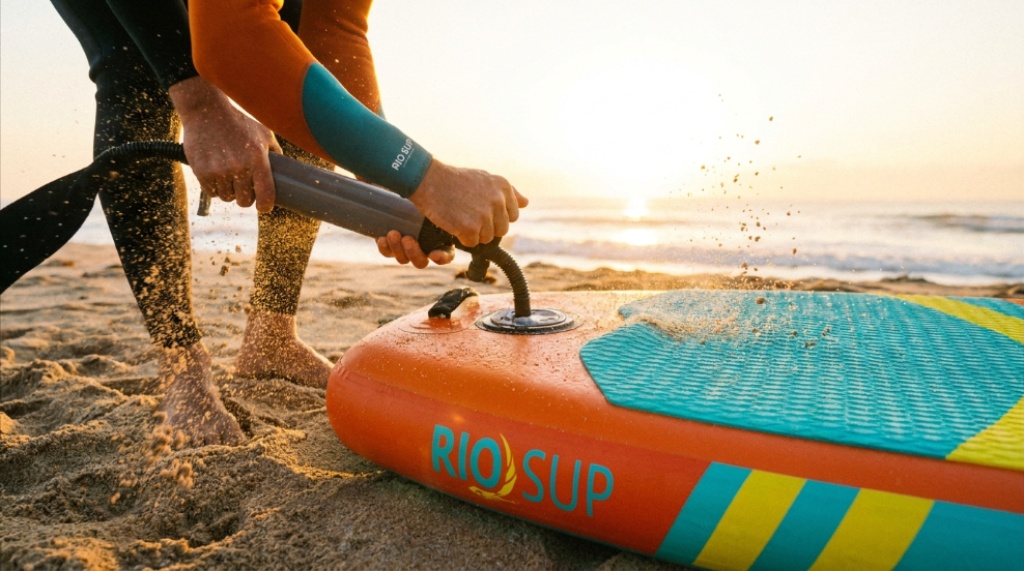
Since carrying is easier on a lightweight board, make sure the carrying bag measures up. A poorly padded shoulder strap or a bag that the board barely fits into will reduce the portability advantage. Additionally, a lightweight board still needs a quality pump. Many brands sell a lightweight dual-chamber pump that inflates the board faster than a standard single-chamber pump; this is a worthwhile accessory because you are more likely to paddle when inflation is not a frustrating workout.
Cost, Storage, and Maintenance Considerations
There is usually a price premium for lighter materials and more advanced construction methods. The price difference between a lightweight board and a standard board of similar length and width is often $100 to $300. You are paying for convenience, and it is helpful to weigh that cost against how often you will transport the board.
When it comes to storage, lightweight boards have a distinct advantage. They roll up into a smaller bundle, often fitting into a carry-on size bag that occupies less than half a closet shelf. You can store them on a high shelf or even in the corner of a small apartment. A standard board’s bag is typically bulkier and harder to lift overhead.
Maintenance is somewhat similar across all inflatable boards, but weight creates one subtle difference. When you haul a lightweight board out of the water and carry it, you are less likely to drag it along the ground or scuff it, which reduces wear and tear. On the flip side, the thinner exterior PVC on some lightweight boards is slightly more prone to punctures from sharp rocks or a dog’s claws. Always lay the board flat on soft ground and never leave it fully inflated in direct sunlight for extended periods, since heat can expand the air and stress the seams.
Frequently Asked Questions
Can a lightweight inflatable paddle board be used by a beginner?
Yes, a lightweight board is a good option for beginners who are light or average weight and paddle on calm water. Just note that a beginner should still pick a board with decent width (32 inches or more) for stable balance. A new paddler should always take care to purchase a board with adequate user weight capacity so beginners are not wobbling from over-flex.
How much weight can a lightweight inflatable paddle board hold?
Most lightweight boards support between 200 and 275 pounds, but this range varies greatly by length and width. Check the manufacturer’s recommendation rather than assuming your maximum weight is safe. If you are near the top of the weight limit, the board will likely feel flexy and slower.
Does a lighter paddle board damage more easily?
Not always, but thinner outer PVC layers mean that careful handling is more important. Impact on sharp edges or dragging the board over rocks can create cuts. Using an adhesive repair kit for minor dings and avoiding rough concrete surfaces will keep the board in good condition.
What is the ideal weight for traveling with a paddle board?
If you are flying or carrying your board long distances, look for models at or below 18 pounds. Many airlines have luggage limits of 50 pounds, so a board, pump, and paddle must fit within that margin. A lightweight board is often the only way to bring your own sup comfortably on a flight without paying excessive baggage fees.
Can I use a lightweight paddle board for yoga?
Probably not your best option unless you have advanced balance skills. Yoga requires a very stable, stiff platform. The flex is noticeable in lightweight boards. If you are set on a lighter board for back pain or transport reasons, choose the widest and thickest board you can find in the lightest range to get the best possible stability.
Conclusion
So, is a lightweight inflatable paddle board the right choice? The answer comes down to your paddling environment and your physical needs. If your weekends involve exploring new waterways, traveling, or you need an easy-to-manage board that won’t strain your back, the lightweight style is a genuinely valuable tool. The effort you save carrying and storing the board often makes paddling more frequent and more enjoyable. Conversely, if you are a heavier paddler, an athlete chasing speed, or you spend most of your time in unpredictable open water, a heavier, stiffer board may make your sessions more rewarding. Take stock of your weight, your usual conditions, and your tolerance for a flexible deck. If you prioritize convenience over peak rigidity, you will love the lightweight approach. If performance is king, choose stability and accept the extra pounds.
