
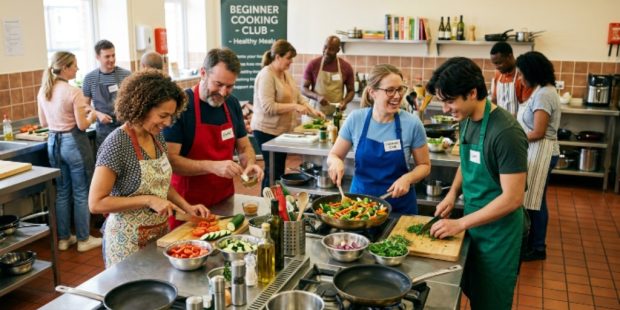
Cooking clubs offer a practical way to learn kitchen skills while meeting people who share similar interests. Recent education research found that 93.9% of older students showed strong interest in learning cooking skills, highlighting growing enthusiasm for hands on food education. Another large cooking education initiative has already reached hundreds of thousands of learners through practical classes. If you want to build confidence, improve everyday meals, and enjoy social learning, joining a cooking club can become one of your smartest personal investments.
What Is a Cooking Club?
A cooking club is a group where members prepare recipes, learn techniques, and improve kitchen confidence together. Every session focuses on practical experience instead of only reading recipes.
Some clubs welcome complete beginners, while others serve experienced home cooks. Therefore, understanding the club’s focus helps you select the right option.
Many clubs meet weekly or twice each month. Members usually cook together before enjoying the finished meal as a group.
Why People Join Cooking Clubs
Cooking clubs provide much more than recipe practice. They create enjoyable learning experiences through teamwork and shared success.
Popular benefits include:
- Learning essential cooking techniques
- Building confidence with new recipes
- Meeting people with similar interests
- Improving meal planning skills
- Discovering healthier food choices
- Reducing dependence on takeout meals
- Practicing food safety habits
- Exploring different world cuisines
Decide Your Cooking Goals
Clear goals make selecting the right club much easier. Every club offers different experiences and learning opportunities.
Learn Basic Cooking
Many beginners simply want confidence in the kitchen. These clubs usually teach knife skills, measuring, food preparation, and simple meals.
Improve Healthy Cooking
Some clubs focus on balanced nutrition and fresh ingredients. Members practice preparing satisfying meals without unnecessary complexity.
Explore International Cuisine
Other clubs introduce recipes from different cultures. Participants learn new flavors while expanding their cooking knowledge.
Prepare for Culinary Careers
Several organizations provide advanced instruction for future culinary students. These programs often include professional kitchen practices.

Find the Right Cooking Club
Finding the right club requires careful research before joining. Fortunately, several reliable options exist.
Look for clubs through these places:
- Community centers
- Public libraries
- Recreation departments
- Adult education programs
- Colleges
- Schools
- Culinary institutes
- Local cooking studios
- Food cooperatives
- Community organizations
Compare several clubs before making your decision. Small differences often create much better learning experiences.
Check Membership Requirements
Every cooking club establishes its own membership guidelines. Reading these details early prevents confusion later.
Some clubs require simple registration before attendance. Others accept walk in participants during scheduled sessions.
Age requirements also vary between organizations. Certain clubs welcome families, while others serve adults only.
Membership fees may include ingredients, equipment, or instruction. Always understand the full cost before enrolling.
Review the Class Schedule
Choose meeting times that match your routine comfortably. Consistent attendance helps you improve much faster.
Weekly sessions work well for people seeking steady progress. Meanwhile, monthly clubs fit busy schedules more easily.
Also confirm each session’s expected length. Most cooking classes last between ninety minutes and three hours.
Understand Equipment Expectations
Many clubs provide kitchen tools for every participant. Others expect members to bring basic personal equipment.
Ask whether you should bring:
- Apron
- Chef knife
- Cutting board
- Food containers
- Notebook
- Water bottle
- Hair tie for long hair
Knowing these expectations helps you arrive fully prepared.
Learn Basic Kitchen Safety
Safe cooking practices protect everyone during group activities. Every quality cooking club emphasizes these habits immediately.
Always wash your hands before handling food. Clean work surfaces regularly throughout every cooking session.
Separate raw meat from ready to eat ingredients. This simple habit reduces the chance of food contamination.
Follow instructor guidance when using sharp knives. Careful attention prevents unnecessary accidents.
Report allergies before class begins. Early communication helps instructors adjust recipes safely.
Be Ready to Participate
Cooking clubs reward active participation instead of passive observation. Every session becomes more valuable when you stay involved.
Volunteer for different preparation tasks whenever possible. Repeated practice quickly builds confidence and speed.
Ask thoughtful questions during demonstrations. Most instructors enjoy helping curious learners improve.
Accept constructive feedback with a positive attitude. Small adjustments often produce noticeable improvements.
Build Strong Relationships
Cooking clubs thrive through teamwork and respectful communication. Friendly behavior creates enjoyable experiences for everyone.
Introduce yourself to new members during each meeting. Simple conversations often develop lasting friendships.
Offer assistance whenever another member needs help. Cooperation strengthens the entire learning environment.
Celebrate everyone’s progress without unnecessary competition. Positive encouragement motivates continued improvement.
Practice Between Meetings
Learning continues after every club session ends. Regular practice transforms classroom lessons into lasting skills.
Cook recently learned recipes at home several times. Repetition improves both confidence and consistency.
Experiment with small ingredient changes carefully. Gradual adjustments develop creativity without overwhelming beginners.
Keep a cooking notebook after each practice session. Personal observations become valuable future references.
Common Beginner Mistakes
Many newcomers experience similar challenges during their first classes. Fortunately, these mistakes remain easy to avoid.
Avoid these common problems:
- Arriving late
- Ignoring safety instructions
- Skipping recipe preparation
- Rushing every cooking step
- Forgetting ingredient measurements
- Refusing helpful feedback
- Leaving workstations untidy
- Overcrowding shared spaces
Simple awareness helps you avoid these issues immediately.
Questions to Ask Before Joining
Gather useful information before committing to any membership. Clear answers help you make confident decisions.
Ask about:
- Beginner friendliness
- Class size
- Membership cost
- Ingredient availability
- Allergy accommodations
- Attendance expectations
- Equipment provided
- Skill progression
These questions eliminate surprises after enrollment.
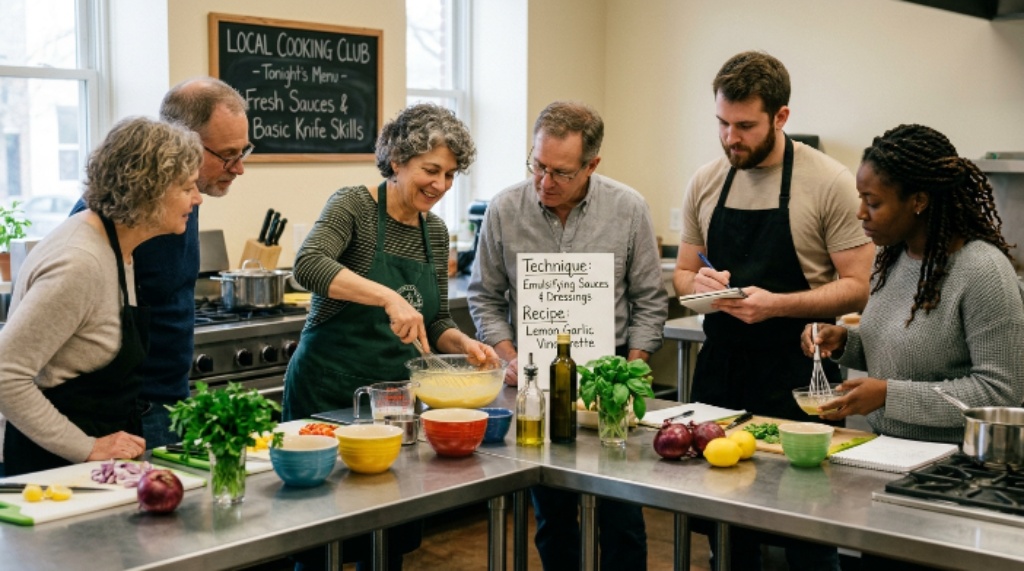
Make the Most of Every Session
Treat each meeting as a valuable learning opportunity. Consistent effort produces steady improvement over time.
Arrive early whenever possible. Extra preparation creates a calmer learning experience.
Read recipes before cooking begins. Familiar instructions reduce confusion during busy activities.
Observe experienced members carefully throughout every session. Practical demonstrations often teach more than written instructions.
Stay patient with yourself during difficult recipes. Every skilled cook once started as a beginner.
Signs You Found the Right Club
The best cooking clubs create welcoming environments for every participant. Learning should always feel encouraging instead of stressful.
Good clubs provide clear instruction and organized sessions. Instructors answer questions respectfully without making beginners uncomfortable.
Members willingly support one another throughout each activity. Positive teamwork helps everyone improve faster.
You should leave every meeting feeling more confident than before. That steady progress indicates excellent instruction.
Conclusion
Joining a cooking club is one of the easiest ways to build practical life skills while enjoying meaningful social experiences. With clear goals, thoughtful preparation, and regular participation, you can develop confidence that extends far beyond the kitchen. Start exploring local cooking clubs today, attend your first session with an open mind, and practice every new skill you learn. Your cooking journey begins with a single step.
FAQs
Do I need cooking experience to join a cooking club?
No, many cooking clubs welcome complete beginners.
What should I bring to my first cooking club meeting?
Bring any requested equipment, an apron, and a willingness to learn.
Are cooking clubs suitable for families?
Yes, many organizations offer family friendly cooking programs.
How often do cooking clubs usually meet?
Most clubs meet weekly or monthly depending on their schedule.
Can cooking clubs help improve healthy eating habits?
Yes, regular cooking practice often encourages healthier meal preparation.
